Your Brain Isn’t Broken — It’s Just Starving for a Moment of Nothing
Why learning to be bored might be the most radical thing you do this year.
5 min read Originally published March 2026
Picture this: you’re deep in the middle of something — a project, an article, a train of thought that was actually going somewhere. Then, without any warning or real reason, your hand moves to your phone. Not because something urgent happened. Not because you needed information. Just… because.
Sound familiar? Here’s the thing most people don’t realize: that moment wasn’t a failure of willpower. It was your nervous system doing exactly what it was built to do — hunting for a reward.
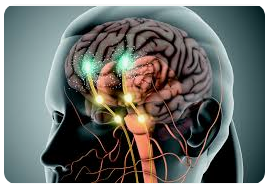
The dopamine hunger you didn’t know you had
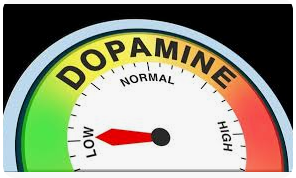
Our brains are wired to seek stimulation. When a task stops feeling interesting or rewarding, dopamine levels quietly dip. And the moment that happens, the brain starts sending out urgent requests: find me something. A notification. A headline. A thirty-second video about absolutely nothing. It doesn’t really matter what — as long as it delivers a quick signal that something is happening.
The problem isn’t that we occasionally get distracted. It’s that we’ve built entire systems — apps, platforms, feeds — specifically designed to feed that hunger on a loop. Which means we’re rarely ever actually bored anymore. And that’s a much bigger issue than it sounds.
“We’ve built an entire world designed to make sure you never have to sit with your own thoughts for more than fifteen seconds.”
Boredom is not the enemy
Here’s the counterintuitive truth: boredom is actually useful. When your mind isn’t occupied with input, it starts doing something remarkable on its own. It wanders. It connects dots. It surfaces questions and ideas and feelings that haven’t had room to breathe. Some of your best thinking — your clearest decisions, your most creative ideas — lives on the other side of boredom.
But you’ll never get there if the moment any quiet opens up, you fill it. Every time you reach for the phone to avoid a dull moment, you’re essentially telling your brain: silence is dangerous, stillness is something to escape. Over time, that message sticks.
Why stillness feels so uncomfortable
There’s a reason people describe silence as “deafening.” When all the noise stops, what fills the space isn’t peace — at least not at first. It’s everything you’ve been too busy to deal with. The awkward conversation you replayed a hundred times. The goal you keep putting off. The quiet truth you’ve been carefully avoiding.
We scroll past these things a dozen times a day. But when the screen goes dark and the room goes quiet, they’re still there. Waiting.
This is why stillness can feel more like a confrontation than a rest. And it’s also why it matters so much. That discomfort isn’t a sign that something is wrong — it’s a sign that your mind is finally getting a chance to process instead of just react.
Try this today
Set a timer for just ten seconds. Find a blank wall — not a window, not your phone, not the room’s most interesting corner. Stare at it. Do absolutely nothing. Notice what your brain does when you don’t hand it something to chew on. That’s where it starts.
A small experiment with a surprisingly big payoff
You don’t have to go off-grid to reclaim your attention. Start with one app — the one you reach for most automatically, the one you open without deciding to. Delete it for just 24 hours. Not to be productive. Not as some kind of punishment. Just to see what happens when that particular exit door is closed.
You’ll probably feel restless at first. Maybe even irritable. That reaction itself is worth paying attention to — it tells you how much mental real estate that app has been quietly occupying.
But something else tends to happen too. Small windows of time reappear. Thoughts start completing themselves instead of getting interrupted. You remember that your inner voice actually has things to say, once you stop talking over it with content.
This isn’t about willpower or going on a digital detox retreat. It’s about reclaiming tiny moments — the five seconds at a red light, the two minutes before a meeting, the space between one task and the next — and letting them be what they are: nothing. Just you and your brain, without an agenda.
Silence isn’t emptiness — it’s raw material
The most interesting ideas don’t usually arrive while you’re consuming something. They arrive in the gaps. In the shower. On a slow walk. In the moment after you close the laptop and haven’t opened anything else yet.
Those moments are not wasted time. They’re the conditions your mind needs to actually think — not just process input, but generate something original. When you protect even a little of that space, you’re not opting out of life. You’re opting back in to the parts of it that are actually yours.
So maybe the most rebellious thing you can do in an age of infinite content isn’t to find better content. It’s to need less of it. To tolerate a little quiet. To let boredom show you what’s underneath.
You might be surprised what’s been waiting there all along.

Leave a Reply