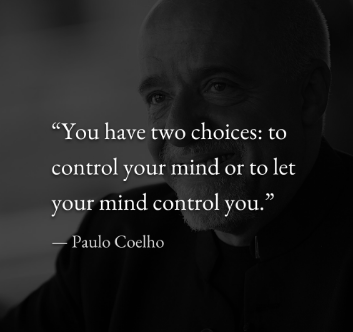
Your mind is always talking. The question is whether you’re listening — and whether what it’s saying is actually true.
I teach this stuff. I live and breathe it. And some days, my own thoughts still get the better of me.
That’s not a confession of failure. That’s just honesty.
image
Negative thoughts aren’t a sign that something is wrong with you. They’re part of being human. But when you let them run the show, they can quietly drain your energy, your confidence, and your peace. I’ve felt that. I still feel it sometimes. And that’s exactly why I know the tools I share actually work — because I need them too.
It starts with noticing. Before you can change anything, you have to catch yourself in the act. What triggers your inner critic? What stories does your mind tell you when you’re stressed, tired, or afraid? I ask myself these questions regularly. Once you can name the pattern, you can start questioning it. Is this thought true? Is it helpful? Or is it just fear talking?
From there, it’s about choosing a different story. Not a fake one. Not toxic positivity. But a truer, more honest one. “I’m struggling with this right now” is more accurate than “I’ll never get this right.” I have to remind myself of that more than I’d like to admit.
Mindfulness practices like deep breathing and meditation pull you back into the present moment — where most of your fears don’t actually live. On the hard days, that’s where I start.
Your environment matters too. The people around you, the content you consume, the activities that restore you — all of it feeds your mindset, one way or another. I guard mine carefully. Not perfectly. But carefully.
image
Here’s what I want you to know: changing how you think isn’t an overnight fix, and anyone who tells you otherwise isn’t being straight with you. It’s a practice. Some days you’ll nail it. Some days the old thoughts will creep back in loud and uninvited.
That’s okay. So is trying again.
Every time you catch a negative thought and choose not to believe it automatically, you’re building something. I’m still building it too. We do this together.
And what to do when dreaming itself feels out of reach
She lived a beautiful life. Her dreams came true. The family, the love, the seasons of purpose. And now, further down the road, she sits in a quiet she didn’t expect. Not a sad quiet, exactly. Just. empty in a way she can’t name.
If you know that feeling, this is for you.
There is a thing that happens when the life you worked for arrives. Or when the chapter that carried your biggest dreams finally closes. The scaffolding comes down. And you realize the dream was doing more than motivating you. It was giving you an identity. A direction. A reason to get up with something ahead of you.
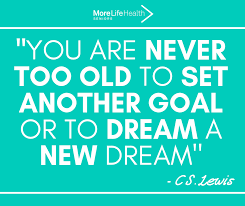
When the dream is fulfilled, what is there left to reach for?
Psychologists have a name for the hollowness that can follow achievement. They call it arrival fallacy. The idea that reaching the destination will feel like enough. That once you get there, you will be enough. And often, it does feel wonderful. For a while. But the mind, the soul, the spirit in you, they were built to move toward something. When that something is gone, a quiet grief sets in that nobody warned you about.
This is not ingratitude. It is not depression, necessarily. It is something more tender than that. It is the ache of a life well-lived, arriving at a place where the old map no longer applies.
Grief has a place here
We do not give people permission to grieve the end of their dreaming years. We celebrate the good life lived and expect the person inside it to feel satisfied. But satisfaction and aliveness are not the same thing.
You are allowed to mourn the version of yourself who had everything ahead of her. You are allowed to sit with the fact that some doors are genuinely closed now. That is not weakness. That is honesty. And honesty is always the starting point for something real.
Dreams don’t die. They change form.
The dreams of your younger years were often about proving something. Building something. Becoming something others could see. The dreams available to you now are quieter. They are less about arrival and more about presence.
What do you still find beautiful? What would you do just because it brings you joy, with no one watching and nothing to prove? What wisdom is still inside you, waiting to be shared? What moment, relationship, or experience would make you say: I am so glad I did that?
Those are not small dreams. They are the most honest ones you have ever been offered.
You are not finished
Dreaming at this stage does not look like a five-year plan. It looks like a Tuesday afternoon spent doing something that lights you up. It looks like one conversation that goes deep. It looks like saying yes to something small and seeing where it leads.
The woman who has lived fully and loved well has more to offer the world than she realizes. Not in spite of where she is in life. Because of it.
Your next dream may not announce itself loudly. It may arrive softly, like morning light through a window you forgot to close. Pay attention to that light.
It is still yours.
If this landed somewhere real for you, I would love to hear about it. Leave a comment below or reach out directly. You are not alone in this season. None of us are.
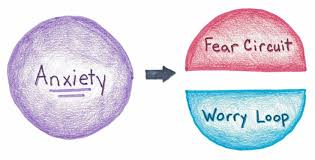
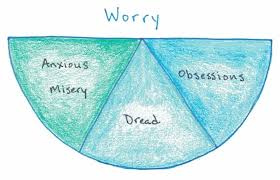
You know the feeling. You wake up at 2 a.m. with a thought that shouldn’t even matter at that hour, and suddenly your mind is running laps. The same concern circles back. Then again. Then again. Before long, you’re not just worried about the original thing. You’re worried about being worried.
That is the worry loop. And if you’ve lived there for any stretch of time, you already know that trying to think your way out of it rarely works.
The good news is that you don’t have to think your way out. You have to breathe, move, and shift your way out. Here are five simple practices that can help you do exactly that.
1. Name It Without Feeding It
The moment you notice the loop starting, say it out loud or write it down. Not a paragraph. One sentence. “I am worried about money.” “I am afraid this won’t work out.” Naming what’s happening creates a small but important distance between you and the thought. You are not the worry. You are the one noticing it. That distinction matters more than it sounds.
2. Give Your Body a Job
Worry lives in the mind, but it takes up residence in the body. Tight shoulders. A clenched jaw. Shallow breath. When you shift your focus to a simple physical action, your nervous system gets a different signal. Wash the dishes slowly. Take a ten-minute walk without your phone. Stretch on the floor. The goal isn’t distraction. It’s re-grounding. Your body knows how to be present even when your mind has wandered three weeks into the future.
3. Try the 4-7-8 Breath
image
Inhale for a count of four. Hold for seven. Exhale slowly for eight. Repeat four times. This breathing pattern activates your parasympathetic nervous system, which is the part of you that tells your body it is safe to settle down. It takes less than two minutes and costs nothing. Keep it in your back pocket for the moments when the loop starts spinning fast.
4. Ask One Grounding Question
Instead of following the worry wherever it wants to go, interrupt it with a simple question: “What is actually true right now, in this moment?” Not tomorrow. Not last week. Right now. Most of the time, the honest answer is that you are physically safe, you have what you need in this moment, and the thing you are dreading has not happened yet. Sometimes that single question is enough to loosen the grip.
image
5. Choose a Worry Window
Give yourself ten intentional minutes each day to worry on purpose. Set a timer. Write down everything that’s bothering you. When the timer goes off, close the notebook. If a worry surfaces outside that window, remind yourself: “That gets its time later.” This practice trains your mind to stop treating every moment as the appropriate time to rehearse worst-case scenarios.
Breaking free from the worry loop is not about becoming someone who never feels anxious. It is about learning that you have more say in where your attention goes than the loop wants you to believe.
You can step out. One breath, one question, one grounded moment at a time.
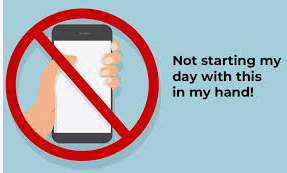
Some mornings, I open my eyes, read one message, and boom. The good day is gone before my feet even touch the floor.
One name on the screen. One request. One tone I don’t like. And suddenly my whole spirit is crowded.
Maybe you know that feeling.
That’s what this one is about: the quiet ways we let the world walk into our peace before we’ve even said hello to ourselves. Before we’ve taken a single breath on purpose. Before we’ve remembered who we are outside of what everyone needs from us.
The Door You Didn’t Know You Left Open
Here’s the thing nobody tells you about boundaries: the most important one isn’t the one you set with other people. It’s the one you set with the morning itself.
The hours between sleep and full waking are spiritually tender. You are soft then. Permeable. The veil between your inner world and the outer one is thin, and what you let in during those first moments sets the tone for everything that follows. Your mood, your energy, your sense of self.
And most of us? We hand that time straight over to whoever sent the last text.
We reach for our phones before we reach for ourselves. We read someone else’s urgency before we’ve checked in on our own. We absorb a tone, a request, a problem and we carry it into the kitchen, into the shower, into the whole rest of the day. We don’t even notice we’ve done it until we’re already irritated and we can’t quite say why.
That’s not a discipline problem. That’s not weakness. That’s what happens when we haven’t claimed our own space first.
Your Spirit Is Sacred Space
I want you to sit with that for a moment.
Your spirit, the interior of you, the quiet seat of who you actually are, is sacred space. It’s not a hallway for other people’s moods to pass through. It’s not a waiting room for everyone else’s needs. It is yours, and it deserves to be tended before it’s tested.
Think about what we do with spaces we consider sacred. We don’t let just anyone walk in. We prepare. We enter with intention. We’re careful about what we bring inside and what we leave at the door. We treat the space with a certain kind of reverence.
Your inner life deserves that same care.
But most of us were never taught this. We were taught to be responsive, to be helpful, to be available. We learned early that being needed meant we were valued. So we keep the door wide open. We stay on call. We wake up already braced for whatever’s coming and then we wonder why we’re exhausted by noon.
The Message Can Wait. You Cannot.
I know the reflex. I have it too. The phone lights up and something in us wants to know. Wants to be ahead of it. Wants to manage whatever it is before it gets bigger.
But let me offer you something to consider: the message will still be there in ten minutes. In twenty. That situation, that request, that person who needs something, they will wait. They have to. Because you cannot pour from a spirit that hasn’t had a single breath of its own air yet.
What cannot wait is you.
What cannot wait is the quiet moment of checking in with yourself before you check in with everyone else. The two-minute pause before you stand up. The window you look out of before you look at a screen. The simple act of asking yourself: How am I today? What do I need this morning? What is mine before anything else gets a piece of me?
These aren’t luxuries. They are maintenance. They are the difference between moving through your day with some center of gravity and getting blown sideways by the first thing that arrives.
A Small Practice for the Morning
You don’t have to overhaul your life. You don’t need a forty-five-minute ritual or a journaling system or a new morning routine you’ll abandon by Thursday.
You just need a gap.
A small, deliberate gap between waking and the world.
Before you pick up the phone, even thirty seconds. Eyes open, one breath. A hand on your chest if that feels right. One question, asked honestly: Am I okay right now?
Not asking about the day ahead. Not running the list. Just: right now, in this moment before anything has happened, how is my spirit?
Some mornings the answer will be: tired, but okay. Some mornings it’ll be: heavy, I don’t know why. Some mornings you might be surprised to find: actually, I feel all right.
Whatever the answer is, it belongs to you. It came before anyone else got to you. That matters more than it might seem.
May This Be the Day
You are going to be needed today. You probably already know by who and by how much. There are things waiting on you, people who depend on you, situations that require your attention and your strength.
That’s real. I’m not asking you to disappear from any of it.
I’m asking you to show up to it as yourself. Not as a reaction to someone else’s first message, not as the already-fraying version who absorbed the morning’s first bad tone and never recovered. As you, grounded in your own spirit, remembering that you are more than what you manage and more than what you give.
May this be the day your spirit remembers it is sacred space.
May this be the day you say hello to yourself first.
May this be the day you let yourself be the first thing that matters. Not out of selfishness, but out of the deep, quiet knowing that you cannot tend to the world from an empty place.
The door will still be there. The messages will still be there.
But you only get this morning once.
Tend to yourself first.
Rita Long is a certified spiritual counselor, ordained minister, and the founder of Breathing Room w/ Rita Long, a wellness and spirituality platform created for women who are ready to stop running on empty.