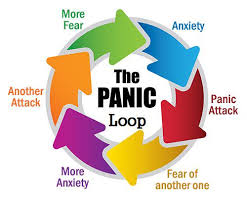
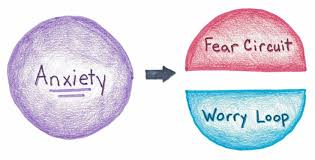
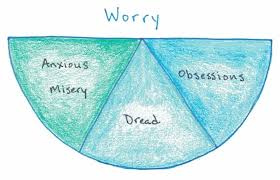
You know the feeling. You wake up at 2 a.m. with a thought that shouldn’t even matter at that hour, and suddenly your mind is running laps. The same concern circles back. Then again. Then again. Before long, you’re not just worried about the original thing. You’re worried about being worried.
That is the worry loop. And if you’ve lived there for any stretch of time, you already know that trying to think your way out of it rarely works.
The good news is that you don’t have to think your way out. You have to breathe, move, and shift your way out. Here are five simple practices that can help you do exactly that.
1. Name It Without Feeding It
The moment you notice the loop starting, say it out loud or write it down. Not a paragraph. One sentence. “I am worried about money.” “I am afraid this won’t work out.” Naming what’s happening creates a small but important distance between you and the thought. You are not the worry. You are the one noticing it. That distinction matters more than it sounds.
2. Give Your Body a Job
Worry lives in the mind, but it takes up residence in the body. Tight shoulders. A clenched jaw. Shallow breath. When you shift your focus to a simple physical action, your nervous system gets a different signal. Wash the dishes slowly. Take a ten-minute walk without your phone. Stretch on the floor. The goal isn’t distraction. It’s re-grounding. Your body knows how to be present even when your mind has wandered three weeks into the future.
3. Try the 4-7-8 Breath
Inhale for a count of four. Hold for seven. Exhale slowly for eight. Repeat four times. This breathing pattern activates your parasympathetic nervous system, which is the part of you that tells your body it is safe to settle down. It takes less than two minutes and costs nothing. Keep it in your back pocket for the moments when the loop starts spinning fast.
4. Ask One Grounding Question
Instead of following the worry wherever it wants to go, interrupt it with a simple question: “What is actually true right now, in this moment?” Not tomorrow. Not last week. Right now. Most of the time, the honest answer is that you are physically safe, you have what you need in this moment, and the thing you are dreading has not happened yet. Sometimes that single question is enough to loosen the grip.
5. Choose a Worry Window
Give yourself ten intentional minutes each day to worry on purpose. Set a timer. Write down everything that’s bothering you. When the timer goes off, close the notebook. If a worry surfaces outside that window, remind yourself: “That gets its time later.” This practice trains your mind to stop treating every moment as the appropriate time to rehearse worst-case scenarios.
Breaking free from the worry loop is not about becoming someone who never feels anxious. It is about learning that you have more say in where your attention goes than the loop wants you to believe.
You can step out. One breath, one question, one grounded moment at a time.

Leave a Reply