
The quiet cost of carrying more than you let on — and what honesty actually looks like.
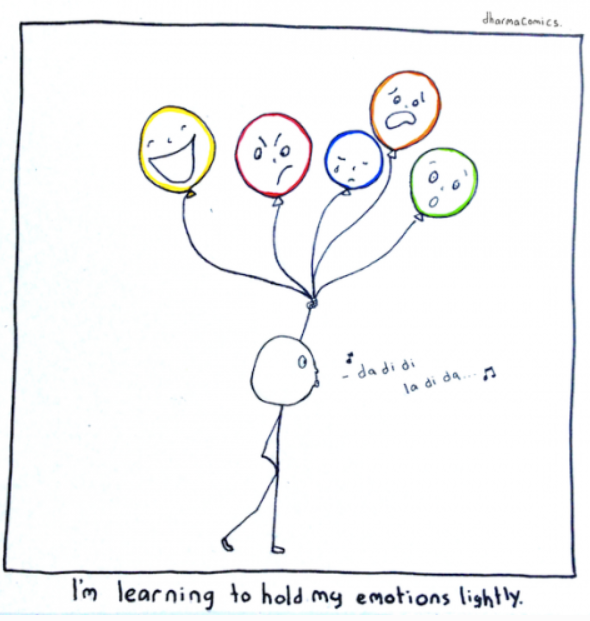
Breathing Room · Wellness
It doesn’t start with a big decision. It starts with a Tuesday.
Someone asks how you’re doing, and instead of going into it, you say, “I’m okay.” Because explaining feels like a whole thing. Because you’re not even sure what you’d say. Because the moment doesn’t feel like the right one.
That’s not a lie, exactly. It’s more like a shortcut — a way to keep moving. And honestly? Sometimes that’s the right call. Not every feeling needs an audience.
But here’s the thing about shortcuts , if you take the same one every single day, it stops being a shortcut.
It becomes the only road you know.
What surprises most people is that holding back emotions doesn’t feel like carrying weight, not at first. It feels like managing well. Like being strong. Like keeping it together.
But your body and your mood are keeping score even when your mind is looking the other way.
You snap at something small and wonder where that came from. You feel drained by a conversation that should have been easy. You go quiet in situations where you used to feel at ease. None of it connects, until it does.
What was stored as “I’ll deal with this later” has been quietly running in the background the whole time.
You may believe you’re holding it together seamlessly. But the people closest to you are picking up on things you haven’t said — shorter replies, a slightly different tone, a warmth that feels like it’s been turned down a notch.
They don’t always know what it means. And that gap. between what they sense and what they’re not told, is where misunderstandings grow. Your silence doesn’t protect the relationship. It just leaves the other person filling in blanks with their own guesses.
I think a lot of us avoid honesty because we picture it getting heavy fast, long explanations, someone crying, a conversation that takes over the whole evening. But that’s not the only version of truth-telling.
Sometimes honest is just:
→ “I’m a little off today. Nothing to worry about.”
→ “I have a lot on my mind, but I’m working through it.”
→ “I’m quieter than usual — it’s not about you.”
Small sentences. No drama. But they do something important — they stop silence from becoming a wall. They give the people around you enough to work with, so they’re not reading into your energy or assuming the worst.

There’s real wisdom in waiting. Sometimes you need space before you can put words to what you’re feeling. That pause — a quiet walk, a few lines in a journal, just sitting still for a moment, can bring more clarity than forcing words before they’re ready.
The question to ask yourself is whether your silence is helping you process or helping you avoid. One creates breathing room. The other just delays the weight.
Functioning well and doing well are not always the same thing. Life can keep moving — messages answered, tasks handled, days completed — while something real stays unaddressed underneath.
You don’t have to have it all figured out to be honest. You don’t need the right words, the full story, or even a clear reason. Sometimes the most real thing you can say is simply:
“I’m not completely fine, but I’m okay enough for now.”
That’s not weakness. That’s actually where emotional honesty begins — not with a big reveal, but with a quiet willingness to stop pretending that everything is perfectly fine when part of you knows it isn’t.
Rita Long is an ordained minister, certified spiritual counselor, and founder of Breathing Room — a space for women navigating real life with honesty, grace, and room to breathe.
Sometimes the most powerful act of self-care isn’t a new habit or a fresh routine — it’s picking up the phone and calling the one person who has always known your whole story.
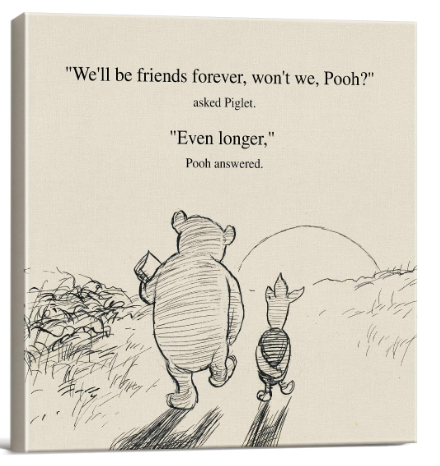
There’s a particular kind of conversation that only exists with one specific person in your life. It doesn’t require small talk or backstory. You can skip the pleasantries, say something ridiculous, and be completely understood. You can be tired, messy, uncertain — and still feel, without question, that you are enough.
That person is your best friend. And if you’ve ever had to go without that connection for a stretch of time — through distance, circumstance, or the quiet drift that life sometimes brings — you know exactly how much is missing when they’re not there.
Reconnecting with a best friend after years of silence isn’t just an emotional experience. It turns out science has quite a bit to say about why that reunion feels so profoundly good for you.
We tend to think of wellness in terms of what we do alone — sleep schedules, movement, mindfulness. But human beings are wired for connection, and the quality of our close relationships is one of the strongest predictors of long-term mental and physical health. The Harvard Study of Adult Development, one of the longest-running studies on human happiness, found that close relationships — more than wealth, fame, or achievement — are what keep people thriving across a lifetime.
A best friend is a specific and irreplaceable category within that landscape. Not just a social contact, but someone who provides what researchers call “perceived social support” — the felt sense that you are not alone, that someone genuinely knows you, and that you matter to another person.
______________________________________________________________________________________________________________________________________________
“Loneliness is as damaging to health as smoking 15 cigarettes a day. Connection, then, is medicine.”
______________________________________________________________________________________________________________________________________________
Life has a way of pulling people apart — not through conflict or falling out, but through the slow accumulation of change. Moves, marriages, children, careers, grief. Sometimes friendships go quiet not because something broke, but because the pace of living left no room for tending them.
What’s remarkable is what often survives that silence. The foundation of a deep friendship doesn’t erode the way we fear it might. Researchers who study social bonds have found that friendships characterized by high closeness can be resumed after long gaps with surprising ease — because the emotional intimacy that built them was real, and real things tend to endure.
Reaching back out after years apart takes courage. There’s vulnerability in it — a quiet fear that too much time has passed, that you’ll be strangers now. But more often than not, the first real conversation cuts right through that fear. The familiarity rushes back. And what follows is something that feels less like catching up and more like coming home.
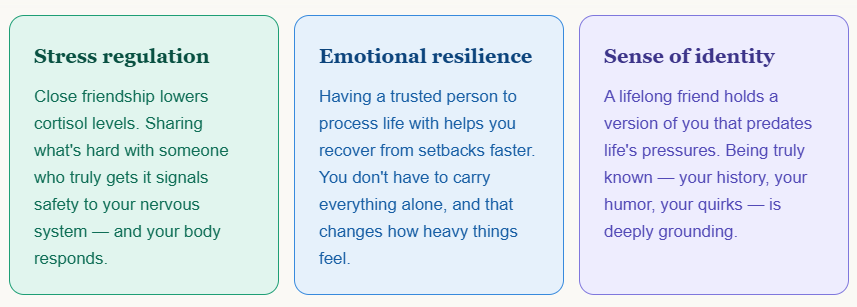
When we reconnect with someone we’ve been close to, the brain responds in ways that go beyond ordinary social interaction. Being seen by someone who has known you across time activates a sense of continuity and self-coherence — particularly valuable during periods of stress or transition, when identity can feel uncertain.
There’s also the specific comfort of shared memory. Laughing about something that happened fifteen years ago isn’t just nostalgia — it’s a reminder that you have a story, a thread of meaning that runs through your life regardless of what’s hard right now.
And practically speaking, a restored friendship gives you someone to call. Not just in crisis, but on an ordinary afternoon when something is weighing on you and you need to hear a voice that already knows you. That access is a genuine, measurable buffer against chronic stress.
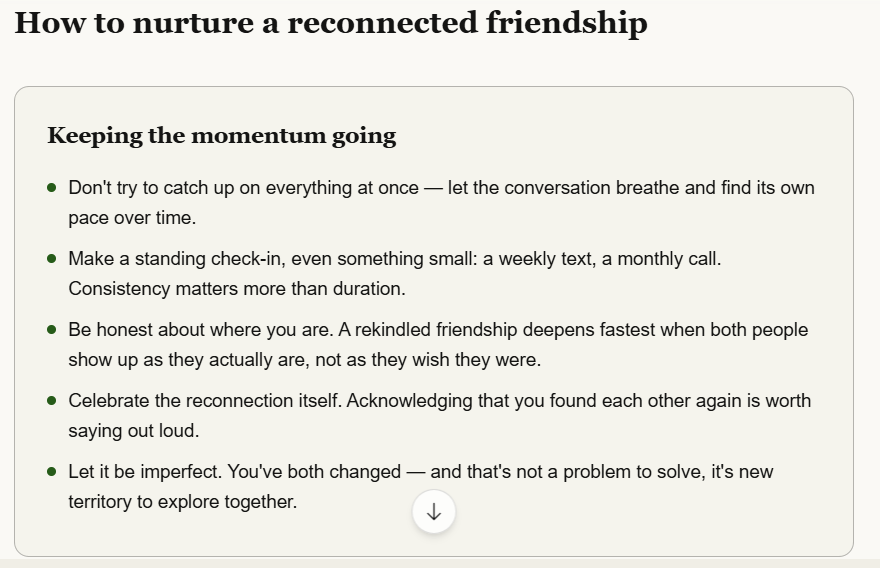
There is a particular kind of peace that settles in when you’ve spent time with someone who has known you across the years — someone who remembers who you were before life got complicated, and who sees who you are now without needing an explanation. That peace is real, and it does something measurable for your nervous system, your mood, and your sense of being held in the world.
If there’s someone in your life you’ve lost touch with — a friend you think about, someone whose name comes up in your memory more than you’d expect — maybe that quiet pull is worth listening to. A simple message. A few words. The door doesn’t have to be wide open to let the light back in.
Sometimes the most wellness-forward thing you can do is just reach out and say: I’ve been thinking about you. How are you?
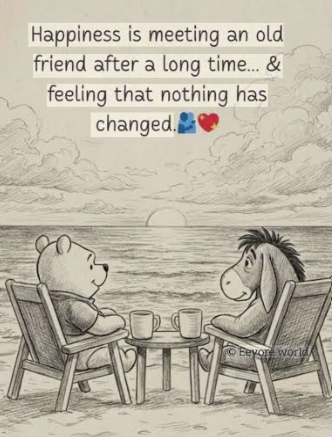
The best friendships don’t expire. They just wait — patiently, faithfully — for the right moment to begin again.
So glad to be in touch again Sue!
The colors we reach for say more than we realize — and intentional color choice can become one of the most powerful tools in emotional healing.

Have you ever felt instantly calmer stepping into a room painted soft sage green? Or noticed a surge of energy when you wore something bright red? Color is rarely neutral. It speaks to something primal in us — influencing mood, memory, and meaning long before we find the words to describe what we’re feeling.
Art therapy takes this intuition seriously. Rather than treating color as decoration, it treats color as communication — a language available to everyone, regardless of artistic skill.
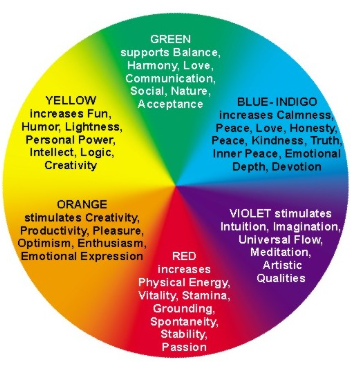
The color wheel of emotions is a framework rooted in psychology that pairs colors with specific emotional states. Think of it as an emotional vocabulary for those moments when feelings are present but words aren’t. Red might surface as passion or frustration. A deep, quiet blue might represent the particular heaviness of grief — or the open spaciousness of peace. The same color can hold opposing truths, which is part of what makes working with it so revealing.
In art therapy settings, this framework helps people externalize what’s internal — giving visible form to experiences that might otherwise stay locked inside.
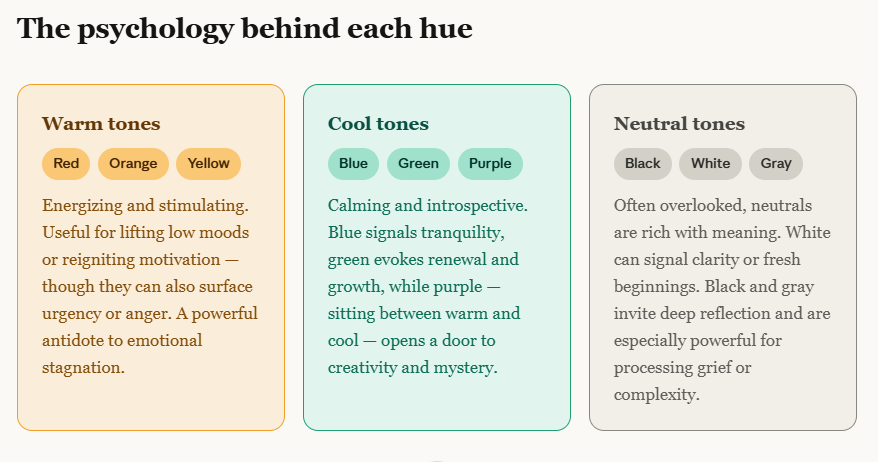
In a session, a therapist might invite a client to choose colors that feel true to what they’re experiencing right now — not what looks good, but what feels honest. Someone moving through anxiety may find themselves drawn to blues and greens without quite knowing why. Someone who feels emotionally stuck might instinctively reach for vivid yellows and oranges.
The act of choosing is itself meaningful. And what emerges on the canvas — the weight of a brushstroke, the way colors bleed into each other, the parts left blank — often reveals more than verbal reflection alone could uncover.
A useful question to sit with during this process: Why does this color feel right today? Or: What does this shade remind me of? You might be surprised what comes up.
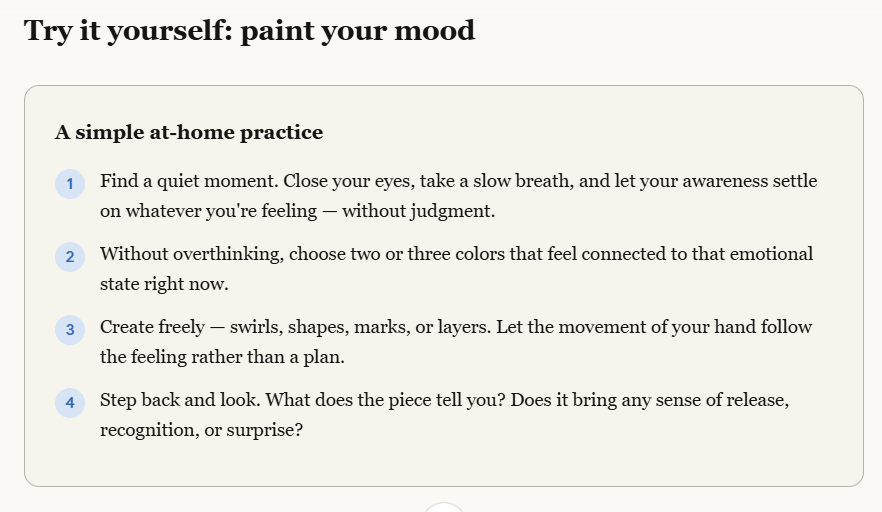
There’s no right outcome here. The goal isn’t a finished painting — it’s a moment of honest contact with yourself, expressed in color rather than words.
What art therapy reminds us is that color is never just pigment. It carries memory, emotion, and meaning that words can miss entirely. Whether you’re processing something heavy or simply exploring how you feel on an ordinary Tuesday, picking up a brush and letting color speak can be quietly transformative.
You don’t need to be an artist. You just need to be willing to look at what you reach for — and ask yourself why.
Every shade has something to say. The question is whether we’re listening.
Most of the stress we carry each day doesn’t come from what actually happens.
It comes from the meaning we attach to it.
A message goes unanswered.
A glance lingers a second too long.
A simple “Can we talk tomorrow?” lands in your inbox.
And just like that, your mind gets to work—fast, creative, and often completely unverified.
You don’t just notice the moment.
You interpret it.
And more often than not, your interpretation leans negative.

Humans are wired to make sense of things quickly. When we don’t have all the information, our brains step in to complete the story.
The problem?
They tend to default to the worst-case version.
But here’s the truth:
Most of the time, we don’t actually know what’s going on.
We’re reacting—not to reality—but to a story we created in its absence.
What if we interrupted that pattern?
What if, instead of assuming the worst… we chose a kinder explanation?
This isn’t about denying reality or pretending everything is perfect.
It’s about recognizing that when you don’t have the facts, you have a choice.
And choosing a harsh story only makes your experience heavier.
Choosing a kinder one makes it lighter.
This is the part most people miss:
When the truth is unknown, your interpretation is optional.
You’re not obligated to believe the first thought that shows up.
You can pause.
You can question it.
You can replace it.
Because the story you choose doesn’t just explain your world—it shapes how you feel inside it.

Try this today.
Just once… or maybe a few times.
Give someone the benefit of the doubt—for ten seconds.
That’s it.
When something feels off:
A short reply.
A missed message.
A tone you didn’t expect.
Before your mind rushes in with its usual explanation, pause.
And consider something softer:
Your brain is already good at creating stories.
For ten seconds, ask it to create a better one.
You don’t have to fully believe it.
You don’t have to commit to it forever.
Just let it exist.
That tiny pause can change everything.
It can:
Because when you stop assuming the worst, you stop reacting to things that may not even be real.
And that’s powerful.
Life is full of unknowns.
People are complicated. Moments are incomplete. Communication is imperfect.
But in the space where certainty is missing…
Kindness is always an option.
Especially toward yourself.
So the next time your mind fills in the blanks, remember:
You don’t have to go with its first draft.
You can choose a better story.
And sometimes, that small choice is enough to change your entire day.
Understanding Triggers, Not Just Words

Have you ever walked away from a conversation feeling completely misunderstood?
You chose your words carefully.
You stayed calm.
You tried to explain yourself clearly.
And somehow… it still turned into conflict.
What you said wasn’t what they heard.
The truth is, not everyone listens with open ears.
Some people listen through their pain.
When someone is unhealed, their past doesn’t stay in the past—it shows up in the present moment, quietly shaping how they interpret everything around them.
So instead of hearing your intention, they hear something else entirely:
It’s not that your words are wrong.
It’s that their wounds are loud.
One of the hardest things to recognize is this:
You’re trying to have a conversation in the present,
but they’re reacting from the past.
Something you said may have brushed against an old hurt—one that has nothing to do with you, but everything to do with what they’ve experienced before.
And in that moment, they’re no longer responding to you.
They’re responding to:
Their reaction may feel confusing, exaggerated, or even unfair.
But to them, it feels real.
Because pain has a way of rewriting the moment.
You can be calm.
You can be kind.
You can be careful.
And still be misunderstood.
Because when someone is triggered, their nervous system is in protection mode—not connection mode.
They’re not asking, “What did you mean?”
They’re reacting to “What does this remind me of?”
And in those moments, even the softest words can feel sharp.
Understanding this doesn’t mean accepting hurtful behavior.
It doesn’t mean walking on eggshells or shrinking yourself to avoid someone else’s triggers.
But it does give you clarity.
It helps you realize:
Sometimes, the issue isn’t communication.
It’s unhealed pain.
We often think of healing as something personal—something we do quietly, on our own time.
But healing directly impacts how we love, how we listen, and how we connect.
Without it:
Healing allows us to pause before reacting.
To hear what’s actually being said—not just what we fear is being said.
To stay present instead of slipping into old stories.
If you find yourself constantly misunderstood by someone, it can be exhausting.
You may start to:
Here’s something important to hold onto:
You are not responsible for healing wounds you didn’t create.
You can be compassionate.
You can be patient.
But you cannot do the healing for someone else.
And no matter how gently you speak, you cannot out-whisper someone else’s pain.
Sometimes the most powerful shift is this:
Instead of asking, “Why don’t they understand me?”
you begin to ask, “What might they be carrying?”
Not to excuse behavior—but to understand it.
And with that understanding, you can decide:
Because healthy connection requires two people who are willing—not just to speak—but to hear.
We all have wounds.
We’ve all, at some point, reacted from a place that had nothing to do with the moment we were in.
So this isn’t about labeling others.
It’s about awareness.
The more we heal, the more clearly we hear.
The more clearly we hear, the more deeply we connect.
And that’s what makes healing so important.
Not just for ourselves—
But for every relationship we want to keep.
Why learning to be bored might be the most radical thing you do this year.
5 min read Originally published March 2026
Picture this: you’re deep in the middle of something — a project, an article, a train of thought that was actually going somewhere. Then, without any warning or real reason, your hand moves to your phone. Not because something urgent happened. Not because you needed information. Just… because.
Sound familiar? Here’s the thing most people don’t realize: that moment wasn’t a failure of willpower. It was your nervous system doing exactly what it was built to do — hunting for a reward.
Our brains are wired to seek stimulation. When a task stops feeling interesting or rewarding, dopamine levels quietly dip. And the moment that happens, the brain starts sending out urgent requests: find me something. A notification. A headline. A thirty-second video about absolutely nothing. It doesn’t really matter what — as long as it delivers a quick signal that something is happening.
The problem isn’t that we occasionally get distracted. It’s that we’ve built entire systems — apps, platforms, feeds — specifically designed to feed that hunger on a loop. Which means we’re rarely ever actually bored anymore. And that’s a much bigger issue than it sounds.
“We’ve built an entire world designed to make sure you never have to sit with your own thoughts for more than fifteen seconds.”
Here’s the counterintuitive truth: boredom is actually useful. When your mind isn’t occupied with input, it starts doing something remarkable on its own. It wanders. It connects dots. It surfaces questions and ideas and feelings that haven’t had room to breathe. Some of your best thinking — your clearest decisions, your most creative ideas — lives on the other side of boredom.
But you’ll never get there if the moment any quiet opens up, you fill it. Every time you reach for the phone to avoid a dull moment, you’re essentially telling your brain: silence is dangerous, stillness is something to escape. Over time, that message sticks.
There’s a reason people describe silence as “deafening.” When all the noise stops, what fills the space isn’t peace — at least not at first. It’s everything you’ve been too busy to deal with. The awkward conversation you replayed a hundred times. The goal you keep putting off. The quiet truth you’ve been carefully avoiding.
We scroll past these things a dozen times a day. But when the screen goes dark and the room goes quiet, they’re still there. Waiting.
This is why stillness can feel more like a confrontation than a rest. And it’s also why it matters so much. That discomfort isn’t a sign that something is wrong — it’s a sign that your mind is finally getting a chance to process instead of just react.
Try this today
Set a timer for just ten seconds. Find a blank wall — not a window, not your phone, not the room’s most interesting corner. Stare at it. Do absolutely nothing. Notice what your brain does when you don’t hand it something to chew on. That’s where it starts.
You don’t have to go off-grid to reclaim your attention. Start with one app — the one you reach for most automatically, the one you open without deciding to. Delete it for just 24 hours. Not to be productive. Not as some kind of punishment. Just to see what happens when that particular exit door is closed.
You’ll probably feel restless at first. Maybe even irritable. That reaction itself is worth paying attention to — it tells you how much mental real estate that app has been quietly occupying.
But something else tends to happen too. Small windows of time reappear. Thoughts start completing themselves instead of getting interrupted. You remember that your inner voice actually has things to say, once you stop talking over it with content.
This isn’t about willpower or going on a digital detox retreat. It’s about reclaiming tiny moments — the five seconds at a red light, the two minutes before a meeting, the space between one task and the next — and letting them be what they are: nothing. Just you and your brain, without an agenda.
The most interesting ideas don’t usually arrive while you’re consuming something. They arrive in the gaps. In the shower. On a slow walk. In the moment after you close the laptop and haven’t opened anything else yet.
Those moments are not wasted time. They’re the conditions your mind needs to actually think — not just process input, but generate something original. When you protect even a little of that space, you’re not opting out of life. You’re opting back in to the parts of it that are actually yours.
So maybe the most rebellious thing you can do in an age of infinite content isn’t to find better content. It’s to need less of it. To tolerate a little quiet. To let boredom show you what’s underneath.
You might be surprised what’s been waiting there all along.

A gentle guide for those who have been running on empty for far too long.
If you’re reading this, you’re probably exhausted in a way that a good night’s sleep stopped fixing a long time ago. Maybe you’ve been going through the motions for months — or years — just trying to get through each day. Maybe you can’t remember the last time something felt easy, or light, or genuinely yours.
That’s burnout. And more specifically, that’s what it looks like when burnout has been going on long enough that survival mode isn’t an emergency response anymore — it’s just become how you live.
The fact that you’re asking how to heal is already meaningful. Here’s what that healing can look like — gently, slowly, and on your own terms.
Prolonged survival mode keeps your body flooded with stress hormones. Over time, your nervous system literally learns that rest is unsafe — that slowing down is a threat. So before anything else, know this: your exhaustion, your numbness, your inability to relax isn’t a personal failing. It’s a physiological adaptation.
Healing means slowly, patiently teaching your body that safety is real again. That takes time. Be patient with yourself.

When we’re burned out, the instinct is often to think our way out of it — to plan, to restructure, to optimise. But healing begins in the body, not the mind. Some gentle starting points:
When you’re chronically depleted, doing “normal” things takes enormous effort. Cooking a meal, replying to a message, getting dressed — these can feel monumental. And that’s okay. It doesn’t mean something is deeply wrong with you. It means you’re running on fumes and your system needs a break.
Give yourself permission to do less than you think you should. The version of “enough” that kept you in survival mode this long clearly wasn’t working. It’s time to try a different standard.

Burnout often disconnects you from joy. Not just the big joys — the small ones too. You stop noticing what feels good, because for so long, nothing really has.
You don’t need to chase happiness. Just start noticing tiny things that feel even slightly good — a warm drink, sunlight on your face, a song that moves something in you. These small signals of aliveness are how you begin to reconnect with yourself. Don’t underestimate them.
Burnout rarely exists in isolation. Underneath it, there’s usually grief, resentment, unmet needs, or things you sacrificed along the way that were never properly acknowledged.
Journaling, therapy, or even just quietly sitting with “this was really hard” can be surprisingly healing. You don’t need to fix everything. Sometimes just naming it — giving it language — releases something.
Recovery requires reducing what’s draining you, even if only slightly. You don’t have to overhaul your entire life overnight. But it helps to honestly notice: what costs you the most? And is any of it negotiable, even just by 10%?
Setting limits isn’t selfish. It’s how you stop the bleeding. And it’s something you may need to practice doing gently, without guilt, over and over again.
This might be the most important thing: the instinct after burnout is often to fix yourself fast and get back to performing. That’s survival mode talking. That’s the same voice that got you here.
Real healing doesn’t follow a schedule. Some weeks you’ll feel better. Others, you’ll feel like you’ve gone backwards. That’s not failure — that’s what non-linear recovery looks like. The goal isn’t to be fixed. The goal is to slowly, gradually, feel more like yourself again.
A few final thoughts:
You deserve to move out of survival and into actually living. Be patient with yourself — you’ve been fighting for a long time.
There’s a particular kind of exhaustion that doesn’t show up on any medical test. It doesn’t leave visible bruises or a fever. It’s the kind of tired that settles into your bones after you’ve spent decades being the person who remembers — the appointments, the gift lists, the emotional temperature of every room you walk into. It’s called mental load, and for women navigating life after menopause, it can quietly become one of the most significant and underacknowledged health issues they face.
Most of us understand the division of physical labor in a household or workplace. Someone cooks the meal. Someone drives to the appointment. Someone folds the laundry. These are visible, countable, completable tasks. When they’re done, they’re done — at least until next time.
Mental load is something else entirely. It is the cognitive and emotional management of everything. It’s not cooking the meal; it’s knowing that the meal needs to be planned, that one person is dairy-free, that the pantry is running low on olive oil, and that you should probably make something comforting because the atmosphere at home has been tense lately. It’s not driving to the appointment; it’s remembering the appointment exists, scheduling it around three other people’s commitments, preparing the list of questions for the doctor, and following up afterward.
Mental load is the project management of daily life — and in most heterosexual partnerships and family units, research consistently shows it falls disproportionately on women. A 2019 study published in Sex Roles found that women reported significantly higher levels of cognitive labor, including anticipating needs, identifying tasks, monitoring progress, and delegating — all while managing the emotional undercurrents of those around them.
The insidious thing about mental load is that it is rarely acknowledged, rarely thanked, and rarely shared equally. It happens in the background of everything else a woman is already doing.
Menopause is not simply the end of a menstrual cycle. It is a whole-body hormonal transition that reshapes how the brain and body function, sometimes profoundly. And yet, women are often expected to simply carry on — managing the same invisible load they always have — while their neurobiology is actively shifting beneath them.
Here’s why that collision is so problematic.
The brain changes. Estrogen is deeply connected to cognitive function. It plays a role in memory consolidation, executive function, and the ability to manage competing demands — the very skills required to carry mental load. During perimenopause and menopause, declining estrogen levels can contribute to brain fog, word-finding difficulties, slower processing speed, and reduced working memory. Women often describe feeling like they’re “losing their mind,” and while this is usually temporary, it coincides with the period when they may still be managing a household, aging parents, careers, and adult children.
Sleep deteriorates. Hot flashes, night sweats, and hormonal fluctuations make deep, restorative sleep elusive for many women in menopause. Sleep deprivation compounds every cognitive challenge. It impairs the prefrontal cortex — the part of the brain responsible for planning, decision-making, and emotional regulation — making the management of mental load not just exhausting, but genuinely harder to do well.
Stress tolerance decreases. Cortisol, the stress hormone, becomes more disruptive in the absence of estrogen’s buffering effects. Things that once felt manageable can now feel overwhelming. The nervous system is more reactive, and recovery from stress takes longer. A woman who once could absorb a chaotic week and bounce back may now feel it linger for days.
Emotional labor intensifies. Post-menopause often brings what researchers call a “role accumulation” peak. A woman in her 50s or early 60s may simultaneously be supporting adult children, caring for aging or ill parents, managing her own health changes, and potentially navigating the shifting dynamics of a long-term relationship. The emotional labor of all of this — the listening, the soothing, the being present for everyone else — stacks on top of an already taxed cognitive system.
Here is where the problem becomes cultural, not just biological.
Our society has no language for a woman in menopause saying, “I cannot hold all of this anymore.” The very same culture that failed to acknowledge her mental load for decades has also failed to acknowledge that her capacity has biologically changed — not permanently, not catastrophically, but significantly enough to matter.
Women are socialized to manage. They are praised for anticipating needs, for being organized, for keeping things together. And so when the load becomes too heavy, many women don’t recognize it as a structural problem — they internalize it as personal failure. They think they’re becoming forgetful, or lazy, or incapable. They don’t realize they’ve been running a marathon while also building the road.
Partners often don’t see it either. Because mental load is invisible, its absence can look like “dropping the ball” rather than a woman finally, desperately, needing the ball to be shared.
When mental load chronically exceeds a person’s capacity — especially in the context of hormonal changes, disrupted sleep, and reduced stress resilience — the consequences are not trivial. Research links chronic cognitive overload in midlife women to elevated rates of anxiety and depression, increased risk of burnout, cardiovascular strain from chronic stress, and worsening of menopause symptoms themselves. The body and mind are not separate systems, and a mind that never rests will eventually demand that the body pay the bill.
The answer is not to help women become more efficient at carrying the load. The answer is to redistribute it.
This means partners genuinely taking ownership of tasks — not just “helping” when asked, but proactively managing domains of home and family life without prompting. It means employers recognizing that women in midlife may need flexibility and support, not judgment. It means adult children understanding that their mother’s capacity is not infinite. And it means healthcare providers asking women not just about hot flashes and bone density, but about stress, sleep, cognitive load, and mental health.
On an individual level, it means women being given — and giving themselves — permission to say: I am not able to be the holder of everything right now. I need this weight shared.
That is not a weakness. That is wisdom born of understanding exactly what the body and mind need to thrive.
The mental load has always been there, often unseen and unacknowledged. Menopause simply makes it harder to hide and harder to bear. In a way, that’s a gift — a biological insistence that something change.
The women who reach midlife and beyond having managed everything for everyone deserve more than gratitude. They deserve structural change, genuine partnership, and the freedom to finally put some things down.
It is not too late to reimagine how the load is carried. But it starts with making the invisible visible — and deciding, together, that one person can no longer carry it all.
If this resonated with you, share it with someone who needs to read it — especially someone who might not realize how much the women in their life are holding.
Emotional Wellness Series | Part Six
Why the Overwhelm You Feel Is Not Functional Freeze — And Why It Might Actually Be Something More Specific
Picture this. It is the middle of a Tuesday. You are sitting at your desk — which also happens to be your dining room table — trying to finish something for work. Out of the corner of your eye you can see the dishes from this morning. The laundry you meant to switch over an hour ago is still sitting in the washer. The living room floor has been bothering you since Sunday. And underneath all of it, somewhere in the background of your brain, a quiet but relentless voice is keeping a running tally of every single thing you have not done yet.
By the time your workday ends you are exhausted in a way that feels impossible to explain. You did not run a marathon. You did not work a physically demanding shift. You sat at a table and typed. So why does your brain feel like it has been wrung completely dry?
And then when you finally turn your attention to the house — to all of those things the voice has been cataloguing all day — you look around and simply cannot begin. Not because you do not want to. Not because you do not care. But because something inside you just stops.
If that resonates with you, I want you to know that what you are experiencing is real, it is specific, and it has very little to do with your discipline, your character, or your worth as a person. What it has everything to do with is the way your brain was built — and the impossible situation that working from home quietly creates inside it.
If you have read the earlier parts of this series you may already be familiar with functional freeze — that state where you can see exactly what needs to be done and still cannot make yourself do it. And you might be wondering if what you experience working from home falls into that category.
The honest answer is that it is related — but it is not quite the same thing. And understanding the distinction matters, because the root cause of what you are feeling shapes what will actually help.
Classic functional freeze typically arrives after depletion. The day is done, the demands have drained you, and your nervous system shifts into shutdown as a form of protection. The freeze comes at the end, as a response to everything that came before it.
What happens when you work from home is more layered than that. The depletion and the environment are not separate experiences happening one after the other. They are happening simultaneously, in the same space, feeding each other all day long. The overwhelm is not waiting for you at the end of the day. It is sitting right next to you the entire time you are trying to work.
When you work from a traditional office your brain operates inside a single, clearly defined context. This is the work space. This is where work happens. Everything in the environment reinforces that one reality — the desk layout, the people around you, the absence of your home surroundings — and your brain can commit fully to that context without competing signals pulling it in another direction.
When you work from home that clean single context disappears entirely. Your brain is now being asked to maintain two completely different mental frameworks inside one physical space at the same time. One part of it is trying to be a focused, capable professional. Another part of it is simultaneously registering every unfinished household task within its field of vision and filing each one away as something that still needs to be addressed.
That second process is not something you can simply choose to turn off. It is an automatic neurological function. Your brain is wired to notice things in your environment that are unresolved, and it holds onto them — quietly, persistently — until they are taken care of.
Psychologists refer to this as the Zeigarnik Effect — the well-documented tendency of the human mind to fixate on unfinished tasks far more than completed ones. In an office environment your home tasks are invisible and therefore largely dormant in your mind. But when your office is your home, those tasks are never invisible. They are always right there, always visible, and always demanding a small piece of your cognitive attention — whether you realize it or not.
Think about what happens when you have too many applications running on your phone or computer at once. Even the ones you are not actively using are consuming processing power in the background. Your device slows down. It heats up. It drains faster than it should. And when you finally open the app you actually need, it struggles to perform the way it normally would.
That is precisely what is happening in your brain when you work from home surrounded by visible, unfinished tasks.
Every pile of laundry, every unwashed dish, every surface that needs attention is running as a background program in your mind all day long. You are not consciously thinking about them constantly — but your brain is registering them, logging them, and holding space for them hour after hour. By the time your workday ends and you are theoretically free to address them, your mental resources have already been quietly drawn down by the effort of tracking them all day.
This is why the overwhelm you feel at the end of the day is disproportionate to the actual size of the tasks. It is not just the dishes you are responding to. It is the dishes plus eight hours of having the dishes in the back of your mind. The weight is cumulative in a way that a single glance at the sink cannot fully explain.
Before remote work became widespread, most people had something built into their daily lives that served an important neurological purpose without anyone ever naming it as such — a commute.
That drive, that walk, that train ride was not just transportation. It was a transition ritual. It was the time your nervous system used to decompress from one context and prepare for the next. It gave your brain a clear signal that work was ending and home was beginning — or vice versa. It created a buffer zone between the two worlds that allowed you to show up in each one more fully.
When you work from home that transition disappears. Your alarm goes off, you open your laptop, and you are at work. You close your laptop and you are at home. There is no in-between. No decompression. No gradual shift from one context to the other.
Without that natural buffer your brain never fully commits to either mode. You are never entirely at work because home is surrounding you. You are never entirely at home because work is always a few steps away. You exist in a permanent middle state — and that perpetual in-between is one of the most quietly exhausting places a human nervous system can live.
What all of this adds up to has a name — context collapse. It is what happens when two distinct environments that your brain has always kept separate are suddenly merged into one physical location.
Context collapse is genuinely disorienting for the human brain. We are creatures of association. Our minds use environmental cues — sights, sounds, spatial arrangements, even smells — to signal which version of ourselves is needed right now. The office cues your professional brain. The home cues your rest brain. When those two sets of cues exist in the same space simultaneously, your brain receives mixed signals all day long and struggles to fully activate either mode.
The result is a kind of chronic low-grade cognitive friction that accumulates quietly throughout the day. You are not burning out in a single dramatic moment. You are wearing down through hundreds of tiny competing signals that your brain has to sort through, hour after hour, without ever fully resolving the tension between them.
Now layer the visual environment on top of all of that.
For people who are already managing context collapse and the Zeigarnik Effect throughout their workday, a visually cluttered or untidy home environment significantly amplifies the cognitive load. Every object out of place is another open loop. Every unfinished task within eyesight is another background program running. Every visible reminder of what still needs to be done adds to the accumulated weight that the brain is already straining under.
And then when the workday ends and it is finally time to address those things — the brain hits a wall. Not because the tasks are actually impossible. Not because the person is actually incapable. But because their mental resources have been so thoroughly drawn down by the invisible labor of context collapse, background tracking, and the absence of real transitions that there is genuinely nothing left to work with.
This is when functional freeze arrives as the final layer. The context collapse creates the depletion. The Zeigarnik Effect accumulates the weight. And freeze is the nervous system’s response to a brain that has simply run out of the resources it needs to initiate action.
Because the root cause of this experience is specific to the work-from-home environment, the solutions need to be equally specific. General productivity advice rarely touches the real problem here. What actually helps is addressing the underlying neurological friction directly.
Even if a separate room for work is not possible, a visually distinct space makes a meaningful difference to your brain. A dedicated desk or corner that is specifically and only for work — with its back to the rest of the living space if possible — gives your brain an environmental cue to shift into work mode when you sit there and shift out when you leave. The boundary does not have to be architectural. It just has to be consistent.
Since the commute no longer provides a natural transition, you need to create one deliberately. A start-of-day ritual and an end-of-day ritual give your nervous system the context shifts it is neurologically wired to need.
Your start ritual could be as simple as making coffee, sitting at your dedicated workspace, and reviewing your plan for the day before opening a single application. Your end ritual could be closing your laptop, physically putting it away somewhere out of sight, changing your clothes, and taking a ten-minute walk — even just around the block. The specific actions matter less than the consistency of performing them every single day without exception.
If unfinished household tasks within your field of vision are running background programs in your brain all day, reducing that visual noise before you start working means you begin the day with fewer open loops competing for your attention. This does not mean your home needs to be spotless. It means that spending fifteen minutes clearing the most visible surfaces before you open your laptop pays cognitive dividends throughout the entire workday.
This sounds deceptively simple but it is a genuine skill that requires practice. When your brain registers an unfinished task during work hours, the habit of saying clearly and intentionally — that is for later, later is not now, I have a plan for that — actually quiets the Zeigarnik loop. You are not ignoring the task. You are giving your brain the signal that it has been heard and that a plan exists, which is often all it needs to release its grip on it temporarily.
One of the most effective ways to close open loops in the brain is to capture them on paper. When unfinished tasks are written down your brain releases much of the cognitive energy it was spending on holding them. Spend two minutes at the end of your workday writing down the two or three home tasks you plan to address that evening. Keep the list short and realistic. You are not creating a master to-do list — you are giving your brain a concrete, manageable plan that it can actually relax into.
Even with all of these strategies in place there will be days when the depletion is simply too deep and the freeze arrives anyway. On those days the path forward is not through willpower or self-criticism. It is through the smallest possible action. Not clean the kitchen — put one thing away. Not do the laundry — move it from the washer to the dryer. Not tackle the whole house — pick up the thing that is closest to you right now. Movement, any movement, signals to your nervous system that forward is possible. And that signal is often enough to create the small opening everything else can follow through.
Working from home was presented to most people as a gift. More flexibility. No commute. The freedom to work in your own space on your own terms. And in many ways it genuinely is those things.
But what nobody adequately prepared people for was the neurological cost of merging two previously separate worlds into one. The context collapse. The relentless visibility of unfinished tasks. The loss of natural transitions. The chronic cognitive friction of trying to be fully at work and fully at home in the same breath, in the same body, in the same room.
If you have been struggling with this and blaming yourself for it — please hear this clearly.
You are not failing at working from home. You are succeeding at something genuinely hard without having been given the tools to do it. That is a very different thing.
Your brain is not broken. It is overwhelmed. And now that you understand why — you can start building the conditions it actually needs to thrive.
This is Part Six of the Emotional Wellness Series. If you are just joining us, the series begins with an introduction to DBT and moves through the four core skills, how to practice them in daily life, what functional freeze really is, and why you might function brilliantly at work while struggling at home. Each post builds on the last and together they form a complete, practical guide to understanding your nervous system and working with it rather than against it. Start from the beginning and read them in order for the fullest picture.
You are not behind. You are not broken. You are learning something important about yourself — and that changes everything.