When You’re Not Being Heard

Understanding Triggers, Not Just Words

image

Have you ever walked away from a conversation feeling completely misunderstood?

You chose your words carefully.
You stayed calm.
You tried to explain yourself clearly.

And somehow… it still turned into conflict.

What you said wasn’t what they heard.


Listening Through Wounds, Not Words

The truth is, not everyone listens with open ears.

Some people listen through their pain.

When someone is unhealed, their past doesn’t stay in the past—it shows up in the present moment, quietly shaping how they interpret everything around them.

So instead of hearing your intention, they hear something else entirely:

  • A simple comment feels like criticism
  • Honesty feels like an attack
  • Silence feels like rejection
  • Boundaries feel like abandonment

It’s not that your words are wrong.

It’s that their wounds are loud.


You’re in a Conversation… They’re in a Memory

One of the hardest things to recognize is this:

You’re trying to have a conversation in the present,
but they’re reacting from the past.

Something you said may have brushed against an old hurt—one that has nothing to do with you, but everything to do with what they’ve experienced before.

And in that moment, they’re no longer responding to you.

They’re responding to:

  • A time they felt rejected
  • A moment they weren’t heard
  • A relationship where they weren’t safe

Their reaction may feel confusing, exaggerated, or even unfair.

But to them, it feels real.

Because pain has a way of rewriting the moment.


Why Gentle Words Don’t Always Land

You can be calm.
You can be kind.
You can be careful.

And still be misunderstood.

Because when someone is triggered, their nervous system is in protection mode—not connection mode.

They’re not asking, “What did you mean?”
They’re reacting to “What does this remind me of?”

And in those moments, even the softest words can feel sharp.


This Is Where It Gets Complicated

Understanding this doesn’t mean accepting hurtful behavior.

It doesn’t mean walking on eggshells or shrinking yourself to avoid someone else’s triggers.

But it does give you clarity.

It helps you realize:

  • Not every reaction is about you
  • Not every misunderstanding is yours to fix
  • Not every conflict can be solved with better wording

Sometimes, the issue isn’t communication.

It’s unhealed pain.


Healing Isn’t Optional—It’s Foundational

We often think of healing as something personal—something we do quietly, on our own time.

But healing directly impacts how we love, how we listen, and how we connect.

Without it:

  • We misinterpret people who care about us
  • We react instead of respond
  • We protect ourselves in ways that push others away

Healing allows us to pause before reacting.

To hear what’s actually being said—not just what we fear is being said.

To stay present instead of slipping into old stories.


When You’re On the Receiving End

If you find yourself constantly misunderstood by someone, it can be exhausting.

You may start to:

  • Over-explain yourself
  • Question your tone, your words, even your intentions
  • Feel like nothing you say ever comes out “right”

Here’s something important to hold onto:

You are not responsible for healing wounds you didn’t create.

You can be compassionate.
You can be patient.
But you cannot do the healing for someone else.

And no matter how gently you speak, you cannot out-whisper someone else’s pain.


Choosing Peace and Clarity

Sometimes the most powerful shift is this:

Instead of asking, “Why don’t they understand me?”
you begin to ask, “What might they be carrying?”

Not to excuse behavior—but to understand it.

And with that understanding, you can decide:

  • When to lean in
  • When to set boundaries
  • When to step back

Because healthy connection requires two people who are willing—not just to speak—but to hear.


A Final Thought

We all have wounds.

We’ve all, at some point, reacted from a place that had nothing to do with the moment we were in.

So this isn’t about labeling others.

It’s about awareness.

The more we heal, the more clearly we hear.
The more clearly we hear, the more deeply we connect.

And that’s what makes healing so important.

Not just for ourselves—

But for every relationship we want to keep.

No Comments SelfcareStress Management

Your Brain Isn’t Broken — It’s Just Starving for a Moment of Nothing

Why learning to be bored might be the most radical thing you do this year.

5 min read Originally published March 2026


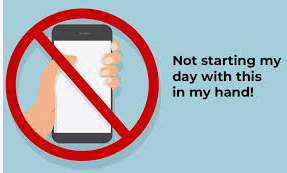
Picture this: you’re deep in the middle of something — a project, an article, a train of thought that was actually going somewhere. Then, without any warning or real reason, your hand moves to your phone. Not because something urgent happened. Not because you needed information. Just… because.

Sound familiar? Here’s the thing most people don’t realize: that moment wasn’t a failure of willpower. It was your nervous system doing exactly what it was built to do — hunting for a reward.

image

The dopamine hunger you didn’t know you had

Our brains are wired to seek stimulation. When a task stops feeling interesting or rewarding, dopamine levels quietly dip. And the moment that happens, the brain starts sending out urgent requests: find me something. A notification. A headline. A thirty-second video about absolutely nothing. It doesn’t really matter what — as long as it delivers a quick signal that something is happening.

The problem isn’t that we occasionally get distracted. It’s that we’ve built entire systems — apps, platforms, feeds — specifically designed to feed that hunger on a loop. Which means we’re rarely ever actually bored anymore. And that’s a much bigger issue than it sounds.

“We’ve built an entire world designed to make sure you never have to sit with your own thoughts for more than fifteen seconds.”

Boredom is not the enemy

Here’s the counterintuitive truth: boredom is actually useful. When your mind isn’t occupied with input, it starts doing something remarkable on its own. It wanders. It connects dots. It surfaces questions and ideas and feelings that haven’t had room to breathe. Some of your best thinking — your clearest decisions, your most creative ideas — lives on the other side of boredom.

But you’ll never get there if the moment any quiet opens up, you fill it. Every time you reach for the phone to avoid a dull moment, you’re essentially telling your brain: silence is dangerous, stillness is something to escape. Over time, that message sticks.

image

Why stillness feels so uncomfortable

There’s a reason people describe silence as “deafening.” When all the noise stops, what fills the space isn’t peace — at least not at first. It’s everything you’ve been too busy to deal with. The awkward conversation you replayed a hundred times. The goal you keep putting off. The quiet truth you’ve been carefully avoiding.

We scroll past these things a dozen times a day. But when the screen goes dark and the room goes quiet, they’re still there. Waiting.

This is why stillness can feel more like a confrontation than a rest. And it’s also why it matters so much. That discomfort isn’t a sign that something is wrong — it’s a sign that your mind is finally getting a chance to process instead of just react.

Try this today

Set a timer for just ten seconds. Find a blank wall — not a window, not your phone, not the room’s most interesting corner. Stare at it. Do absolutely nothing. Notice what your brain does when you don’t hand it something to chew on. That’s where it starts.

A small experiment with a surprisingly big payoff

You don’t have to go off-grid to reclaim your attention. Start with one app — the one you reach for most automatically, the one you open without deciding to. Delete it for just 24 hours. Not to be productive. Not as some kind of punishment. Just to see what happens when that particular exit door is closed.

You’ll probably feel restless at first. Maybe even irritable. That reaction itself is worth paying attention to — it tells you how much mental real estate that app has been quietly occupying.

But something else tends to happen too. Small windows of time reappear. Thoughts start completing themselves instead of getting interrupted. You remember that your inner voice actually has things to say, once you stop talking over it with content.

This isn’t about willpower or going on a digital detox retreat. It’s about reclaiming tiny moments — the five seconds at a red light, the two minutes before a meeting, the space between one task and the next — and letting them be what they are: nothing. Just you and your brain, without an agenda.

Silence isn’t emptiness — it’s raw material

The most interesting ideas don’t usually arrive while you’re consuming something. They arrive in the gaps. In the shower. On a slow walk. In the moment after you close the laptop and haven’t opened anything else yet.

Those moments are not wasted time. They’re the conditions your mind needs to actually think — not just process input, but generate something original. When you protect even a little of that space, you’re not opting out of life. You’re opting back in to the parts of it that are actually yours.

So maybe the most rebellious thing you can do in an age of infinite content isn’t to find better content. It’s to need less of it. To tolerate a little quiet. To let boredom show you what’s underneath.

You might be surprised what’s been waiting there all along.

No Comments MindfulnessSelfcareStress Management

How to Start Healing Gently From Burnout

image

A gentle guide for those who have been running on empty for far too long.

If you’re reading this, you’re probably exhausted in a way that a good night’s sleep stopped fixing a long time ago. Maybe you’ve been going through the motions for months — or years — just trying to get through each day. Maybe you can’t remember the last time something felt easy, or light, or genuinely yours.

That’s burnout. And more specifically, that’s what it looks like when burnout has been going on long enough that survival mode isn’t an emergency response anymore — it’s just become how you live.

The fact that you’re asking how to heal is already meaningful. Here’s what that healing can look like — gently, slowly, and on your own terms.

First, understand what happened to your nervous system

Prolonged survival mode keeps your body flooded with stress hormones. Over time, your nervous system literally learns that rest is unsafe — that slowing down is a threat. So before anything else, know this: your exhaustion, your numbness, your inability to relax isn’t a personal failing. It’s a physiological adaptation.

Healing means slowly, patiently teaching your body that safety is real again. That takes time. Be patient with yourself.

Start with your body, not your to-do list

image

When we’re burned out, the instinct is often to think our way out of it — to plan, to restructure, to optimise. But healing begins in the body, not the mind. Some gentle starting points:

  • Slow, gentle movement — walks outside, stretching, or yoga — signals safety to your nervous system far more than productivity ever will.
  • Rest without guilt. True rest — doing nothing, not scrolling — is medicine, not laziness.
  • Prioritise sleep, not as a reward you earn, but as a non-negotiable foundation. Everything else is downstream of this.

Lower the bar — radically

When you’re chronically depleted, doing “normal” things takes enormous effort. Cooking a meal, replying to a message, getting dressed — these can feel monumental. And that’s okay. It doesn’t mean something is deeply wrong with you. It means you’re running on fumes and your system needs a break.

Give yourself permission to do less than you think you should. The version of “enough” that kept you in survival mode this long clearly wasn’t working. It’s time to try a different standard.

Find tiny moments of genuine pleasure

image

Burnout often disconnects you from joy. Not just the big joys — the small ones too. You stop noticing what feels good, because for so long, nothing really has.

You don’t need to chase happiness. Just start noticing tiny things that feel even slightly good — a warm drink, sunlight on your face, a song that moves something in you. These small signals of aliveness are how you begin to reconnect with yourself. Don’t underestimate them.

Name what you’re carrying

Burnout rarely exists in isolation. Underneath it, there’s usually grief, resentment, unmet needs, or things you sacrificed along the way that were never properly acknowledged.

Journaling, therapy, or even just quietly sitting with “this was really hard” can be surprisingly healing. You don’t need to fix everything. Sometimes just naming it — giving it language — releases something.

Protect your energy — without shame

Recovery requires reducing what’s draining you, even if only slightly. You don’t have to overhaul your entire life overnight. But it helps to honestly notice: what costs you the most? And is any of it negotiable, even just by 10%?

Setting limits isn’t selfish. It’s how you stop the bleeding. And it’s something you may need to practice doing gently, without guilt, over and over again.

Let healing be slow

This might be the most important thing: the instinct after burnout is often to fix yourself fast and get back to performing. That’s survival mode talking. That’s the same voice that got you here.

Real healing doesn’t follow a schedule. Some weeks you’ll feel better. Others, you’ll feel like you’ve gone backwards. That’s not failure — that’s what non-linear recovery looks like. The goal isn’t to be fixed. The goal is to slowly, gradually, feel more like yourself again.

A few final thoughts:

  • Therapy — especially somatic or trauma-informed approaches — can be deeply helpful for chronic burnout, because it works with the nervous system, not just your thoughts.
  • If you’re experiencing physical symptoms — exhaustion that doesn’t lift, brain fog, recurring illness — it’s worth checking in with a doctor. Chronic stress affects the body in real, measurable ways.
  • You don’t have to do all of this at once. Pick one small thing that feels doable, and start there.

You deserve to move out of survival and into actually living. Be patient with yourself — you’ve been fighting for a long time.

No Comments SelfcareStress Management

The Power of Words: Why What You Say Matters More Than You Think

image

Words are not just sounds or symbols. They are energy — alive, potent, and lasting.


We live in an age of noise. Messages fly at us from every direction — social media, text threads, news feeds, casual conversations. In all of this noise, we’ve somehow convinced ourselves that words are cheap. Throwaway. Easy to take back.

They’re not.

Words carry an energy that most of us severely underestimate. They can lift a person out of the darkest moment of their life, or push someone further into it. They can build decades-long relationships, or shatter them in a single sentence. Long after the moment has passed, long after the person who said them has forgotten they ever spoke — words linger. They echo. They become the voice inside someone’s head.

That’s not a small thing. That’s extraordinary power.


Words Are Energy

Think about a time someone said something genuinely kind to you — not a polite compliment, but something that felt true. Something they didn’t have to say. Chances are, you still remember it. Maybe it came at exactly the right moment. Maybe it changed how you saw yourself.

Now think about a time someone’s words cut you. A criticism delivered carelessly. A comment made in anger. An offhand remark that the speaker probably forgot about before they’d even finished the sentence.

You remember that too, don’t you?

That is the weight of words. They don’t evaporate when the conversation ends. They settle into us. The good ones become quiet fuel — the reason we kept going, kept trying, kept believing in ourselves. The harmful ones can become invisible chains, shaping how we move through the world without us ever realizing it.

Words are not passive. They do something to the people who receive them.


Speak Slowly. Speak Confidently.

There is a quiet power in the person who doesn’t rush their words. Who pauses before they speak. Who seems unbothered by silence. In a world where everyone is in a hurry to be heard, the person who takes their time to speak well commands attention — not because they demand it, but because they’ve earned it.

Speaking slowly signals something important: I’ve thought about this. What I’m saying matters. It gives your listener time to actually receive what you’re saying, rather than simply waiting for their turn to respond. And it gives you the space to say what you actually mean, rather than what comes out in the heat of the moment.

Confidence in speech isn’t about volume. It’s not about having all the answers or never being uncertain. It’s about owning what you say. It’s the difference between “I don’t know, maybe, I could be wrong, but maybe…” and “I’m not sure yet, but here’s what I think.” Both are honest. Only one carries weight.

When you speak with confidence and intention, people listen differently. They lean in. They trust you more. And more importantly — you trust yourself more.


Think Before You Speak

This is perhaps the most radical act in modern life: actually pausing before you respond.

The impulse to react immediately is everywhere. Someone says something provocative, and every instinct fires at once — defend yourself, correct them, prove a point, match their energy. But the words that come out in those moments are rarely the words you actually want to have said. They’re reactive, not intentional. They’re born from the heat of the moment, not from your deeper self.

Thinking before you speak is not hesitation. It’s wisdom. It’s the split second where you ask yourself: Is this true? Is this necessary? Is this kind? What am I actually trying to say — and what will it actually do?

Sometimes the answer is to speak boldly, to say the hard thing that needs to be said. Other times, the most powerful choice is restraint — to let silence do the work instead. Either way, the pause is never wasted. It’s where intention lives.


Words Resonate Forever

A parent tells a child they’re not smart enough. Decades later, that grown adult still hears it in moments of self-doubt.

A teacher tells a struggling student they have something special. Years later, that student — now successful — still thinks of that moment when they needed courage.

We carry our words with us, and we carry the words of others. Some of them we chose. Some were handed to us without our permission. But what we do with the words we give to others — that is entirely in our hands.

The conversation you have today might become the voice in someone’s head tomorrow. The encouragement you offer might be the thing that keeps someone going when everything else tells them to stop. And yes, the careless, unthought remark could be the stone that someone carries for years.

This is not meant to make you afraid to speak. It’s meant to make you intentional about it.


Choose Your Words Like They Matter — Because They Do

You don’t need to be a poet or a philosopher to wield words well. You just need to be present. To slow down. To ask yourself what you actually want to say, and why.

Speak with care. Speak with courage when courage is needed. Speak with kindness when kindness is what the moment calls for. And when in doubt — pause. Think. Let the silence breathe for a moment before you fill it.

Because words, once spoken, belong to the world. They go places you never intended, touch people you’ll never know, and last longer than you’ll ever realize.

Use them well.


“The tongue has no bones, but it is strong enough to break a heart. Be careful with your words.”

No Comments Mindfulness

100 Work From Home Jobs That Have Nothing to Do With IT or Video Editing

The way we work has changed forever. More people than ever are ditching the daily commute, trading in their office cubicles, and building careers from the comfort of their own homes. But if you’ve ever searched for remote work opportunities online, you’ve probably noticed the same two categories dominating every list — IT jobs and video editing. And while those are great options for some, they’re certainly not for everyone.

The good news? You don’t need to know how to code or sit behind a editing timeline to thrive in the remote work world. There is an enormous and growing market for remote professionals across nearly every industry imaginable — from healthcare and finance to education, creative arts, and beyond.

Whether you’re a stay-at-home parent looking to re-enter the workforce, someone tired of the 9-to-5 grind, or simply searching for a career change that offers more flexibility, this list was made for you. We’ve put together 100 legitimate work from home jobs that have absolutely nothing to do with IT or video editing, covering a wide range of skill sets, experience levels, and industries.

So grab a coffee, get comfortable, and let’s explore the remote career that could be waiting for you.

Here are 100 work from home jobs that have nothing to do with IT:

Writing & Editorial

1. Freelance writer

2. Copywriter

3. Content strategist

4. Blog writer

5. Grant writer

6. Technical writer (non-IT)

7. Ghostwriter

8. Proofreader

9. Copy editor

10. Resume writer

Education & Coaching

11. Online tutor

12. Curriculum developer

13. E-learning course creator

14. Language teacher (ESL, etc.)

15. Life coach

16. Career coach

17. Academic advisor

18. Test prep instructor

19. Homeschool educator

20. Music teacher (virtual lessons)

Administrative & Business Support

21. Virtual assistant

22. Data entry specialist

23. Online research assistant

24. Executive assistant

25. Scheduling coordinator

26. Transcriptionist

27. Bookkeeper

28. Billing specialist

29. Payroll administrator

30. Document reviewer

Sales & Marketing

31. Social media manager

32. Email marketing specialist

33. Affiliate marketer

34. Brand ambassador

35. Market research analyst

36. SEO content writer

37. Advertising copywriter

38. Public relations specialist

39. Lead generation specialist

40. Sales representative

Finance & Accounting

41. Accountant

42. Tax preparer

43. Financial analyst

44. Budget consultant

45. Insurance agent

46. Mortgage loan officer

47. Financial planner

48. Auditor

49. Accounts payable/receivable clerk

50. Cryptocurrency trader

Healthcare & Wellness

51. Telehealth nurse

52. Medical coder

53. Medical biller

54. Health coach

55. Nutritionist/dietitian

56. Mental health therapist (telehealth)

57. Medical transcriptionist

58. Pharmacy technician (remote roles)

59. Health insurance specialist

60. Yoga/fitness instructor (virtual)

Creative & Design

61. Graphic designer

62. Illustrator

63. Animator

64. UX/UI designer

65. Logo designer

66. Photo editor

67. Stock photographer

68. Podcast producer

69. Voice-over artist

70. Audiobook narrator

Legal & Compliance

71. Paralegal

72. Legal transcriptionist

73. Contract reviewer

74. Compliance officer

75. Legal researcher

76. Court reporter (remote)

77. Immigration consultant

78. Intellectual property specialist

79. Claims adjuster

80. HR compliance specialist

Customer Service

81. Customer service representative

82. Chat support agent

83. Call center agent

84. Customer success manager

85. Complaint resolution specialist

86. Order fulfillment coordinator

87. Client onboarding specialist

88. Community manager

89. Help desk support (non-IT)

90. Retention specialist

Miscellaneous

91. Travel agent

92. Event planner (virtual events)

93. Real estate agent (remote-friendly)

94. Translator/interpreter

95. Survey taker/researcher

96. Recruiter/headhunter

97. E-commerce seller (Etsy, eBay, Amazon)

98. Mystery shopper (online)

99. Closed captioning specialist

100. Online juror (mock trial participant)

These span a wide range of skill levels and industries, so there’s something for almost everyone

The Bottom Line

The traditional 9-to-5 office job is no longer the only path to a successful and fulfilling career. The remote work revolution has completely changed the game, and the opportunities available today didn’t even exist a decade ago. Whether you’re a complete beginner or a seasoned professional looking for a change, there is something on this list for you.

The hardest part isn’t finding the opportunity — it’s taking that very first step. So don’t let fear or uncertainty hold you back from the flexibility and freedom that a work from home career can offer.

Getting Started

The key to getting started is to keep it simple. Look back through the list and pick one or two jobs that align with the skills you already have. You don’t need to reinvent yourself overnight. Start where you are, with what you know, and build from there. Update your resume to reflect the qualities that remote employers love most — things like self-motivation, strong written communication, and the ability to manage your own time. If you don’t have a LinkedIn profile yet, now is the perfect time to create one.

Staying Consistent

Once you start applying, treat your job search like a job itself. Set a routine, create daily goals, and stick to them. Set up a dedicated workspace in your home so your brain knows when it’s time to focus. And above all else, be patient with yourself. Landing your first remote role can take time, but the people who stay consistent are always the ones who get there.

Where to Find Legitimate Remote Work

When it comes to finding remote jobs, stick to reputable platforms like FlexJobs, Remote.co, We Work Remotely, and LinkedIn. These sites vet their listings and make it much easier to find real opportunities. One important word of warning — always be cautious of scams. A legitimate remote job will never ask you to pay a fee upfront or send you a check before you’ve even started working. If something feels off, trust your gut.

Final Thoughts

Your dream career doesn’t have to come with a commute, a dress code, or a boss hovering over your shoulder. The remote work world is wide open and waiting for people just like you. Take this list, find your fit, and go after it with everything you have.

The only move you’ll regret is the one you never made.

No Comments SelfcareVirtual Assistant

Gratitude Prompts

image

People & Relationships 

  1. Who made you feel seen or heard recently? 
  1. Who in your life do you take for granted that you couldn’t live without? 
  1. Who believed in you before you believed in yourself? 
  1. Who made you laugh this week? 
  1. Who showed up for you during a hard time? 
image

Simple Everyday Moments  

6. What’s something you experienced today that you’d miss if it were gone?  

7. What’s a comfort in your daily routine you rarely stop to appreciate?  

8. What’s a sound, smell, or taste that instantly makes you feel at home?  

9. What’s something your body did today that you’re grateful for?  

10. What’s a small luxury you have that once felt out of reach? 

Challenges & Growth  

11. What’s a hard season of life that made you stronger?  

12. What’s a mistake that ended up teaching you something valuable?  

13. What’s a door that closed that led you somewhere better?  

14. What’s a fear you faced that you’re proud of? 15. What’s something you once worried about that never happened? 

The Overlooked  

16. What’s something working perfectly in your life that you never think about?  

17. What’s a skill or talent you have that you don’t give yourself credit for?  

18. What’s a place you’ve been that left a mark on you?  

19. What’s something in nature that stopped you in your tracks?  

20. What’s a book, song, or movie that changed how you see the world? 

image

Abundance & Opportunity  

21. What opportunities do you have today that a younger version of you would have dreamed of?  

22. What resources do you have access to that make your life easier?  

23. What freedoms do you have that you don’t think about often?  

24. What’s something you get to do today versus have to do?  

25. What’s a goal you’ve already achieved that you’ve stopped celebrating? 

Self & Inner Life  

26. What’s something you genuinely like about yourself?  

27. What value or belief guides your life that you’re grateful you developed?  

28. What’s a habit that’s quietly improving your life?  

29. What’s a moment from your past that still brings you joy when you think about it?  

30. If today were your last day, what would you be most grateful you experienced? 

No Comments GratitudeMindfulness

The Invisible Weight: Why Mental Load Hits Differently After Menopause

There’s a particular kind of exhaustion that doesn’t show up on any medical test. It doesn’t leave visible bruises or a fever. It’s the kind of tired that settles into your bones after you’ve spent decades being the person who remembers — the appointments, the gift lists, the emotional temperature of every room you walk into. It’s called mental load, and for women navigating life after menopause, it can quietly become one of the most significant and underacknowledged health issues they face.


First, Let’s Separate the Two: Mental Load vs. Physical Acts

Most of us understand the division of physical labor in a household or workplace. Someone cooks the meal. Someone drives to the appointment. Someone folds the laundry. These are visible, countable, completable tasks. When they’re done, they’re done — at least until next time.

Mental load is something else entirely. It is the cognitive and emotional management of everything. It’s not cooking the meal; it’s knowing that the meal needs to be planned, that one person is dairy-free, that the pantry is running low on olive oil, and that you should probably make something comforting because the atmosphere at home has been tense lately. It’s not driving to the appointment; it’s remembering the appointment exists, scheduling it around three other people’s commitments, preparing the list of questions for the doctor, and following up afterward.

Mental load is the project management of daily life — and in most heterosexual partnerships and family units, research consistently shows it falls disproportionately on women. A 2019 study published in Sex Roles found that women reported significantly higher levels of cognitive labor, including anticipating needs, identifying tasks, monitoring progress, and delegating — all while managing the emotional undercurrents of those around them.

The insidious thing about mental load is that it is rarely acknowledged, rarely thanked, and rarely shared equally. It happens in the background of everything else a woman is already doing.


Why Menopause Changes Everything

Menopause is not simply the end of a menstrual cycle. It is a whole-body hormonal transition that reshapes how the brain and body function, sometimes profoundly. And yet, women are often expected to simply carry on — managing the same invisible load they always have — while their neurobiology is actively shifting beneath them.

Here’s why that collision is so problematic.

The brain changes. Estrogen is deeply connected to cognitive function. It plays a role in memory consolidation, executive function, and the ability to manage competing demands — the very skills required to carry mental load. During perimenopause and menopause, declining estrogen levels can contribute to brain fog, word-finding difficulties, slower processing speed, and reduced working memory. Women often describe feeling like they’re “losing their mind,” and while this is usually temporary, it coincides with the period when they may still be managing a household, aging parents, careers, and adult children.

Sleep deteriorates. Hot flashes, night sweats, and hormonal fluctuations make deep, restorative sleep elusive for many women in menopause. Sleep deprivation compounds every cognitive challenge. It impairs the prefrontal cortex — the part of the brain responsible for planning, decision-making, and emotional regulation — making the management of mental load not just exhausting, but genuinely harder to do well.

Stress tolerance decreases. Cortisol, the stress hormone, becomes more disruptive in the absence of estrogen’s buffering effects. Things that once felt manageable can now feel overwhelming. The nervous system is more reactive, and recovery from stress takes longer. A woman who once could absorb a chaotic week and bounce back may now feel it linger for days.

Emotional labor intensifies. Post-menopause often brings what researchers call a “role accumulation” peak. A woman in her 50s or early 60s may simultaneously be supporting adult children, caring for aging or ill parents, managing her own health changes, and potentially navigating the shifting dynamics of a long-term relationship. The emotional labor of all of this — the listening, the soothing, the being present for everyone else — stacks on top of an already taxed cognitive system.


The Expectation Gap

Here is where the problem becomes cultural, not just biological.

Our society has no language for a woman in menopause saying, “I cannot hold all of this anymore.” The very same culture that failed to acknowledge her mental load for decades has also failed to acknowledge that her capacity has biologically changed — not permanently, not catastrophically, but significantly enough to matter.

Women are socialized to manage. They are praised for anticipating needs, for being organized, for keeping things together. And so when the load becomes too heavy, many women don’t recognize it as a structural problem — they internalize it as personal failure. They think they’re becoming forgetful, or lazy, or incapable. They don’t realize they’ve been running a marathon while also building the road.

Partners often don’t see it either. Because mental load is invisible, its absence can look like “dropping the ball” rather than a woman finally, desperately, needing the ball to be shared.


The Cost of Carrying Too Much

When mental load chronically exceeds a person’s capacity — especially in the context of hormonal changes, disrupted sleep, and reduced stress resilience — the consequences are not trivial. Research links chronic cognitive overload in midlife women to elevated rates of anxiety and depression, increased risk of burnout, cardiovascular strain from chronic stress, and worsening of menopause symptoms themselves. The body and mind are not separate systems, and a mind that never rests will eventually demand that the body pay the bill.


What Needs to Change

The answer is not to help women become more efficient at carrying the load. The answer is to redistribute it.

This means partners genuinely taking ownership of tasks — not just “helping” when asked, but proactively managing domains of home and family life without prompting. It means employers recognizing that women in midlife may need flexibility and support, not judgment. It means adult children understanding that their mother’s capacity is not infinite. And it means healthcare providers asking women not just about hot flashes and bone density, but about stress, sleep, cognitive load, and mental health.

On an individual level, it means women being given — and giving themselves — permission to say: I am not able to be the holder of everything right now. I need this weight shared.

That is not a weakness. That is wisdom born of understanding exactly what the body and mind need to thrive.


A Final Word

The mental load has always been there, often unseen and unacknowledged. Menopause simply makes it harder to hide and harder to bear. In a way, that’s a gift — a biological insistence that something change.

The women who reach midlife and beyond having managed everything for everyone deserve more than gratitude. They deserve structural change, genuine partnership, and the freedom to finally put some things down.

It is not too late to reimagine how the load is carried. But it starts with making the invisible visible — and deciding, together, that one person can no longer carry it all.


If this resonated with you, share it with someone who needs to read it — especially someone who might not realize how much the women in their life are holding.

No Comments MenopauseSelfcareStress Management

Working From Home Is Not the Dream They Sold You

Emotional Wellness Series  |  Part Six

Why the Overwhelm You Feel Is Not Functional Freeze — And Why It Might Actually Be Something More Specific

Picture this. It is the middle of a Tuesday. You are sitting at your desk — which also happens to be your dining room table — trying to finish something for work. Out of the corner of your eye you can see the dishes from this morning. The laundry you meant to switch over an hour ago is still sitting in the washer. The living room floor has been bothering you since Sunday. And underneath all of it, somewhere in the background of your brain, a quiet but relentless voice is keeping a running tally of every single thing you have not done yet.

By the time your workday ends you are exhausted in a way that feels impossible to explain. You did not run a marathon. You did not work a physically demanding shift. You sat at a table and typed. So why does your brain feel like it has been wrung completely dry?

And then when you finally turn your attention to the house — to all of those things the voice has been cataloguing all day — you look around and simply cannot begin. Not because you do not want to. Not because you do not care. But because something inside you just stops.

If that resonates with you, I want you to know that what you are experiencing is real, it is specific, and it has very little to do with your discipline, your character, or your worth as a person. What it has everything to do with is the way your brain was built — and the impossible situation that working from home quietly creates inside it.

Is This Functional Freeze — Or Something Different?

If you have read the earlier parts of this series you may already be familiar with functional freeze — that state where you can see exactly what needs to be done and still cannot make yourself do it. And you might be wondering if what you experience working from home falls into that category.

The honest answer is that it is related — but it is not quite the same thing. And understanding the distinction matters, because the root cause of what you are feeling shapes what will actually help.

Classic functional freeze typically arrives after depletion. The day is done, the demands have drained you, and your nervous system shifts into shutdown as a form of protection. The freeze comes at the end, as a response to everything that came before it.

What happens when you work from home is more layered than that. The depletion and the environment are not separate experiences happening one after the other. They are happening simultaneously, in the same space, feeding each other all day long. The overwhelm is not waiting for you at the end of the day. It is sitting right next to you the entire time you are trying to work.

Your Brain Was Never Designed to Hold Two Worlds at Once

When you work from a traditional office your brain operates inside a single, clearly defined context. This is the work space. This is where work happens. Everything in the environment reinforces that one reality — the desk layout, the people around you, the absence of your home surroundings — and your brain can commit fully to that context without competing signals pulling it in another direction.

When you work from home that clean single context disappears entirely. Your brain is now being asked to maintain two completely different mental frameworks inside one physical space at the same time. One part of it is trying to be a focused, capable professional. Another part of it is simultaneously registering every unfinished household task within its field of vision and filing each one away as something that still needs to be addressed.

That second process is not something you can simply choose to turn off. It is an automatic neurological function. Your brain is wired to notice things in your environment that are unresolved, and it holds onto them — quietly, persistently — until they are taken care of.

Psychologists refer to this as the Zeigarnik Effect — the well-documented tendency of the human mind to fixate on unfinished tasks far more than completed ones. In an office environment your home tasks are invisible and therefore largely dormant in your mind. But when your office is your home, those tasks are never invisible. They are always right there, always visible, and always demanding a small piece of your cognitive attention — whether you realize it or not.

The Background Program That Never Shuts Off

Think about what happens when you have too many applications running on your phone or computer at once. Even the ones you are not actively using are consuming processing power in the background. Your device slows down. It heats up. It drains faster than it should. And when you finally open the app you actually need, it struggles to perform the way it normally would.

That is precisely what is happening in your brain when you work from home surrounded by visible, unfinished tasks.

Every pile of laundry, every unwashed dish, every surface that needs attention is running as a background program in your mind all day long. You are not consciously thinking about them constantly — but your brain is registering them, logging them, and holding space for them hour after hour. By the time your workday ends and you are theoretically free to address them, your mental resources have already been quietly drawn down by the effort of tracking them all day.

This is why the overwhelm you feel at the end of the day is disproportionate to the actual size of the tasks. It is not just the dishes you are responding to. It is the dishes plus eight hours of having the dishes in the back of your mind. The weight is cumulative in a way that a single glance at the sink cannot fully explain.

The Transition That Never Happens

Before remote work became widespread, most people had something built into their daily lives that served an important neurological purpose without anyone ever naming it as such — a commute.

That drive, that walk, that train ride was not just transportation. It was a transition ritual. It was the time your nervous system used to decompress from one context and prepare for the next. It gave your brain a clear signal that work was ending and home was beginning — or vice versa. It created a buffer zone between the two worlds that allowed you to show up in each one more fully.

When you work from home that transition disappears. Your alarm goes off, you open your laptop, and you are at work. You close your laptop and you are at home. There is no in-between. No decompression. No gradual shift from one context to the other.

Without that natural buffer your brain never fully commits to either mode. You are never entirely at work because home is surrounding you. You are never entirely at home because work is always a few steps away. You exist in a permanent middle state — and that perpetual in-between is one of the most quietly exhausting places a human nervous system can live.

Context Collapse — When Two Worlds Share One Space

What all of this adds up to has a name — context collapse. It is what happens when two distinct environments that your brain has always kept separate are suddenly merged into one physical location.

Context collapse is genuinely disorienting for the human brain. We are creatures of association. Our minds use environmental cues — sights, sounds, spatial arrangements, even smells — to signal which version of ourselves is needed right now. The office cues your professional brain. The home cues your rest brain. When those two sets of cues exist in the same space simultaneously, your brain receives mixed signals all day long and struggles to fully activate either mode.

The result is a kind of chronic low-grade cognitive friction that accumulates quietly throughout the day. You are not burning out in a single dramatic moment. You are wearing down through hundreds of tiny competing signals that your brain has to sort through, hour after hour, without ever fully resolving the tension between them.

When Context Collapse Meets Visible Clutter

Now layer the visual environment on top of all of that.

For people who are already managing context collapse and the Zeigarnik Effect throughout their workday, a visually cluttered or untidy home environment significantly amplifies the cognitive load. Every object out of place is another open loop. Every unfinished task within eyesight is another background program running. Every visible reminder of what still needs to be done adds to the accumulated weight that the brain is already straining under.

And then when the workday ends and it is finally time to address those things — the brain hits a wall. Not because the tasks are actually impossible. Not because the person is actually incapable. But because their mental resources have been so thoroughly drawn down by the invisible labor of context collapse, background tracking, and the absence of real transitions that there is genuinely nothing left to work with.

This is when functional freeze arrives as the final layer. The context collapse creates the depletion. The Zeigarnik Effect accumulates the weight. And freeze is the nervous system’s response to a brain that has simply run out of the resources it needs to initiate action.

What Actually Helps — Practical Tools for Work From Home Overwhelm

Because the root cause of this experience is specific to the work-from-home environment, the solutions need to be equally specific. General productivity advice rarely touches the real problem here. What actually helps is addressing the underlying neurological friction directly.

Create physical boundaries that separate work from home

Even if a separate room for work is not possible, a visually distinct space makes a meaningful difference to your brain. A dedicated desk or corner that is specifically and only for work — with its back to the rest of the living space if possible — gives your brain an environmental cue to shift into work mode when you sit there and shift out when you leave. The boundary does not have to be architectural. It just has to be consistent.

Build artificial transitions into the beginning and end of every workday

Since the commute no longer provides a natural transition, you need to create one deliberately. A start-of-day ritual and an end-of-day ritual give your nervous system the context shifts it is neurologically wired to need.

Your start ritual could be as simple as making coffee, sitting at your dedicated workspace, and reviewing your plan for the day before opening a single application. Your end ritual could be closing your laptop, physically putting it away somewhere out of sight, changing your clothes, and taking a ten-minute walk — even just around the block. The specific actions matter less than the consistency of performing them every single day without exception.

Reduce visible clutter before your workday begins

If unfinished household tasks within your field of vision are running background programs in your brain all day, reducing that visual noise before you start working means you begin the day with fewer open loops competing for your attention. This does not mean your home needs to be spotless. It means that spending fifteen minutes clearing the most visible surfaces before you open your laptop pays cognitive dividends throughout the entire workday.

Practice giving your brain permission to let it go until later

This sounds deceptively simple but it is a genuine skill that requires practice. When your brain registers an unfinished task during work hours, the habit of saying clearly and intentionally — that is for later, later is not now, I have a plan for that — actually quiets the Zeigarnik loop. You are not ignoring the task. You are giving your brain the signal that it has been heard and that a plan exists, which is often all it needs to release its grip on it temporarily.

End your workday with a short written list for the evening

One of the most effective ways to close open loops in the brain is to capture them on paper. When unfinished tasks are written down your brain releases much of the cognitive energy it was spending on holding them. Spend two minutes at the end of your workday writing down the two or three home tasks you plan to address that evening. Keep the list short and realistic. You are not creating a master to-do list — you are giving your brain a concrete, manageable plan that it can actually relax into.

When freeze arrives anyway — and it will sometimes — start with the smallest possible thing

Even with all of these strategies in place there will be days when the depletion is simply too deep and the freeze arrives anyway. On those days the path forward is not through willpower or self-criticism. It is through the smallest possible action. Not clean the kitchen — put one thing away. Not do the laundry — move it from the washer to the dryer. Not tackle the whole house — pick up the thing that is closest to you right now. Movement, any movement, signals to your nervous system that forward is possible. And that signal is often enough to create the small opening everything else can follow through.

What You Deserve to Hear

Working from home was presented to most people as a gift. More flexibility. No commute. The freedom to work in your own space on your own terms. And in many ways it genuinely is those things.

But what nobody adequately prepared people for was the neurological cost of merging two previously separate worlds into one. The context collapse. The relentless visibility of unfinished tasks. The loss of natural transitions. The chronic cognitive friction of trying to be fully at work and fully at home in the same breath, in the same body, in the same room.

If you have been struggling with this and blaming yourself for it — please hear this clearly.

You are not failing at working from home. You are succeeding at something genuinely hard without having been given the tools to do it. That is a very different thing.

Your brain is not broken. It is overwhelmed. And now that you understand why — you can start building the conditions it actually needs to thrive.

This is Part Six of the Emotional Wellness Series. If you are just joining us, the series begins with an introduction to DBT and moves through the four core skills, how to practice them in daily life, what functional freeze really is, and why you might function brilliantly at work while struggling at home. Each post builds on the last and together they form a complete, practical guide to understanding your nervous system and working with it rather than against it. Start from the beginning and read them in order for the fullest picture.

You are not behind. You are not broken. You are learning something important about yourself — and that changes everything.

No Comments SelfcareStress Management

Why You Can Excel at Work and Fall Apart at Home

Part Five of the DBT & Emotional Wellness Series

The Hidden Truth About How Your Nervous System Really Works

You are a completely different person at work than you are at home. At work, you are reliable, capable, and switched on. You hit your deadlines, handle difficult conversations, and keep it all together in ways that would genuinely impress people if they could see it. Then you walk through your front door — and something shifts. The laundry sits untouched. The dishes pile up. The energy that carried you through the entire workday evaporates so completely that you wonder if it was ever really yours to begin with.

If you have ever looked at this gap and decided it meant something was wrong with you — that you are somehow inconsistent, hypocritical, or secretly lazy — I want to offer you a completely different explanation.

Nothing is wrong with you. What is happening is neurological, deeply human, and far more understandable than most people realize.

Two Environments, Two Completely Different Nervous Systems

Here is the core truth that changes everything: your ability to function is not just about you — it is about the conditions surrounding you. Work and home are not two versions of the same environment. They are two entirely different operating systems, and your brain responds to them accordingly.

At work, the structure already exists before you arrive. The schedule is set. The expectations are clear. The consequences for falling behind are immediate and visible. Other people are counting on you in ways that feel concrete and real. Your brain does not have to generate a reason to move forward — the environment hands it one every hour of the day.

At home, none of that scaffolding exists. Every task requires you to generate your own motivation, build your own structure, set your own priorities, and hold yourself accountable entirely from the inside. For a brain and nervous system that are already running low, that is an almost impossible amount of invisible labor to ask.

The Performance Tax You Pay Every Day Without Realizing It

There is something that happens between your first cup of coffee and the moment you walk back through your front door that most people never account for. It is called the performance tax — and it is very, very real.

Throughout the workday, most of us are not just doing our jobs. We are also carefully managing how we appear while we do them. We hold our frustration when a meeting runs long. We smile through conversations that drain us. We push through the afternoon slump without letting anyone see how hard we are working just to stay present. We adjust, adapt, regulate, and perform — and we do all of it simultaneously, often without any awareness that it is happening.

That ongoing effort to manage both your actual work and your external presentation is neurologically expensive. It draws on the same finite mental and emotional resources that you will need later to handle everything waiting for you at home.

By the time you arrive home, you are not starting your personal life with a full tank. You are starting it with whatever is left over after the workday already took its cut. And often, that is not very much at all.

Why Home Is Where the Mask Finally Comes Off

Here is the paradox that sits at the center of all of this, and it is one worth sitting with for a moment.

The reason you fall apart at home is not because home is where you fail. It is because home is where you finally feel safe enough to stop performing.

Your nervous system is constantly scanning the environment around you, assessing whether it is safe to let your guard down. At work, the social stakes are high enough that your brain keeps that guard firmly in place. There are professional norms, power dynamics, and reputational considerations that keep your system regulated even when everything inside you wants to unravel.

But the moment you step into your home — your own space, with no audience, no performance required — your nervous system reads the room and finally exhales. Everything you were holding together all day begins to surface. The fatigue, the stress, the emotional residue of a hundred small moments you did not have time to process. It all comes up at once.

That release is not weakness. That is your nervous system doing exactly what healthy nervous systems do — they regulate up when the environment demands it and they release when it is finally safe to do so. The problem is not that you are releasing. The problem is that the release has become so total, so immediate, that it tips from relief into shutdown.

The Science Behind the Shutdown

Your brain has a component called the prefrontal cortex — the part responsible for planning, organizing, making decisions, and initiating tasks. It is essentially your internal project manager. When it is well-rested and operating in a low-stress environment, it runs your to-do list with relative efficiency.

When stress hormones are elevated — which they often are after a full day of demands, deadlines, and social navigation — that part of your brain begins to slow down. Its ability to prioritize, sequence, and initiate tasks diminishes significantly. This is why you can look directly at something that needs to be done and still not be able to figure out where to begin. It is not a motivation problem. It is a neurological one.

Add to that the reality that home tasks, unlike work tasks, are rarely broken down into clear, sequential steps with defined starting points. A pile of laundry is not a task. It is an undefined cluster of decisions — sort, wash, dry, fold, put away — each of which requires its own initiation. Your depleted brain looks at that cluster and cannot find the entry point. So it does not enter at all.

This is functional freeze in action — and it is not a character flaw. It is your brain protecting itself from a demand it does not currently have the resources to meet.

The Role of External Accountability

One of the most underappreciated differences between work and home is the presence — or absence — of external accountability. At work, other people are watching. Deadlines have real consequences. Your performance is visible, measured, and tied to outcomes that matter beyond just your own comfort.

Human beings are wired for social accountability. We are a deeply communal species, and our nervous systems are designed to respond to the presence of others in ways that activate our focus and follow-through. When someone else is counting on us, we find resources within ourselves that seem to appear out of nowhere.

At home, that external pressure is largely absent. The dishes do not care if you do them tonight or next week. The laundry will not send a follow-up email. And so the part of your brain that responds to social accountability sits quiet — while the pile grows and the guilt builds on top of it.

What You Can Actually Do About It

Understanding why this happens is the first and most important step. But understanding alone does not fold the laundry. Here are some ways to bridge the gap between work-you and home-you in a way that works with your nervous system rather than against it.

Create a transition ritual

Your nervous system needs a clear signal that you are shifting gears — not from fully on to completely off, but from work mode to home mode. Without that signal, the drop from peak performance to total shutdown can be immediate and extreme. A transition ritual gives your brain a middle ground to land on.

This could look like changing out of your work clothes the moment you arrive home, taking a ten-minute walk before you come inside, sitting in your car for five minutes of quiet before you go in, or putting on a specific playlist that signals the shift. The content of the ritual matters less than the consistency. Do the same thing every day and your nervous system will begin to use it as a regulation tool.

Bring structure home on purpose

Your brain thrives inside structure that exists outside of your head. At work, that structure is built into the environment. At home, you have to build it yourself — but the good news is that even a loose, flexible framework is significantly better than none at all.

Try creating a simple evening rhythm rather than a rigid schedule. Not a military timeline — just a general flow. Wind down first, then one small task, then dinner, then whatever you need. The predictability of a loose routine gives your executive function something to follow without overwhelming a system that is already depleted.

Borrow the accountability your brain is missing

Since your nervous system responds to external accountability in ways it simply cannot replicate internally when depleted, give it some. Text a friend and tell them you are going to do one task and report back when you are done. Set a visible timer and treat it like a meeting you cannot miss. Put on a show you only allow yourself to watch while you are doing something productive. Work alongside someone else, even virtually.

You are not cheating by needing these tools. You are simply giving your brain the conditions it needs to perform — the same way your workplace does, just in a different form.

Redefine what rest actually means

One of the reasons people cycle between pushing too hard and crashing completely is that they never build in rest that is real, intentional, and guilt-free. Rest that comes with a side of shame is not rest — it is just a pause in the self-criticism.

Decide in advance that a specific amount of time is for genuine recovery — not productivity in disguise, not passive scrolling, but actual restoration. Then protect that time fiercely. A nervous system that gets real rest returns to function far more efficiently than one that is shamed into pushing through on empty.

The Reframe That Changes Everything

You are not two different people. You are one person operating under two radically different sets of conditions — and performing accordingly.

The version of you that shows up reliably at work is not your real self and the version that struggles at home is not your real self either. They are both real. They are both you. And the difference between them has far more to do with environment, structure, and nervous system resources than it does with character, discipline, or worth.

Stop measuring your worth by which version of yourself you see most often. Start measuring it by the fact that you keep showing up — at work, at home, and in these quiet moments of honest self-reflection — even when it is hard. Even when the gap feels impossibly wide.

The gap is not evidence of your failure. It is a map pointing directly toward what you need. And now that you can read it, you can finally start to close it.

You are not behind. You are not broken. You are just learning — and that is exactly where you need to be.

No Comments MindfulnessSelfcareStress Management

Functional Freeze — Why You Can See Everything That Needs to Be Done and Still Not Be Able to Move

Part Four of the DBT & Emotional Wellness Series


Have you ever stood in the middle of a messy room, looked around at everything that needed to be done, and then simply walked away? Not because you did not care. Not because you were being lazy. But because something inside you just — stopped?

Have you ever laid down in the middle of the day, not because you were physically exhausted, but because continuing forward felt genuinely impossible?

If that sounds familiar, I want you to know something important before we go any further.

You are not lazy. You are not broken. You are not failing at life.

What you are experiencing has a name — and understanding it might be one of the most compassionate and clarifying things you do for yourself today.


What Is Functional Freeze?

Functional freeze is what happens when your nervous system becomes so overwhelmed that it shifts into a kind of internal shutdown mode. It is not a mental illness. It is not a personality flaw. It is a survival response — one that your brain and body have been running since long before you were born.

Here is the simplest way to understand it.

Your nervous system has three basic responses to perceived threat or overwhelm. You have probably heard of fight and flight — the responses that push you toward action, either to confront something or escape it. But there is a third response that does not get nearly enough attention, and that is freeze.

Freeze is what happens when fighting feels impossible and running feels pointless. Your system does not know what else to do, so it does the only other thing it can — it goes very, very still.

The word “functional” is important here because this is not the kind of freeze that leaves you completely unable to move or speak. You can still go through the motions of your day. You can still hold a conversation, scroll your phone, and make a cup of coffee. But the deeper, more meaningful tasks — the ones that require decision making, emotional energy, or sustained focus — become almost impossible to access.

You are present. But you are not fully online.


Why You Can See the Mess and Still Walk Away

This is the part that people judge themselves most harshly for, and I want to address it directly.

You are not walking away because you do not care. You are not walking away because you are unmotivated or irresponsible. You are walking away because your brain genuinely cannot find a safe entry point into the task.

Here is what is actually happening beneath the surface.

When you look at a cluttered room your brain does not process it as one single task. It processes it as hundreds of tiny decisions all demanding your attention at the same time. Where do I start? What goes where? What if I start and cannot finish? What does finishing even look like? Is there even a point?

That avalanche of micro-decisions floods your executive function — the part of your brain responsible for planning, prioritizing, and initiating action. And when your nervous system is already running in a stressed or overwhelmed state, executive function is one of the very first things to go offline.

So you look at the room. Your brain tries to find a starting point. It cannot locate one quickly enough. Your system interprets that as a threat. And your body responds the only way it knows how in that moment.

You walk away.

Not because you chose to give up. But because your nervous system made that choice before your conscious mind even had a chance to weigh in.


Why You Lay Down

When you find yourself lying down in the middle of the day — not from physical tiredness but from a kind of bone-deep inability to keep going — that is your nervous system doing something very specific.

It is shifting into what researchers call the dorsal vagal state. In plain language, your body is conserving every resource it has because it has decided, below the level of your conscious awareness, that the situation is too much to handle right now.

It is the same ancient instinct that causes animals to go completely still when they sense a predator nearby. Stillness as protection. Stillness as survival.

Except in your case the predator is not a physical threat. It is an overwhelming to-do list. An emotion you cannot name or process. A decision that feels too heavy. The accumulation of everything you have been carrying without enough support or rest.

Your body does not know the difference between a lion and an impossible afternoon. It just knows that something feels like too much — and it responds accordingly.

This is not weakness. This is your nervous system working exactly as it was designed to. The only problem is that it was designed for a very different world than the one we are living in now.


What Is Actually Happening Underneath the Surface

Functional freeze rarely appears out of nowhere. It is usually the end result of one or more of these underlying experiences:

Chronic stress or burnout. When your nervous system has been running on high alert for an extended period of time it eventually stops responding with anxiety and hyperactivity and starts responding with numbness and shutdown instead. This is not you giving up. This is neurological exhaustion. Your system has been working overtime for so long that it has simply run out of fuel.

Unprocessed trauma. You do not have to have experienced something dramatic or catastrophic for trauma to be part of your story. Smaller, quieter experiences — years of feeling unseen, relationships that required you to shrink yourself, environments that never felt fully safe — can all train your nervous system to default to freeze when things feel uncertain or unmanageable.

Executive function overload. Executive function is essentially your brain’s project manager. It handles planning, prioritizing, initiating, and following through. When stress hormones flood your system that project manager goes on emergency leave. Tasks that should feel simple suddenly feel impossible — not because you are incapable but because the part of your brain responsible for managing them has temporarily gone offline.

Emotional overload. Sometimes the freeze has absolutely nothing to do with the physical task in front of you. Sometimes you are carrying something so heavy emotionally that your entire system is consumed by the effort of holding it together. There is simply no bandwidth left for action because every available resource is already being used just to keep you upright.


The Shame That Makes It Worse

Here is something that is critical to understand.

Shame does not break the freeze. It deepens it.

Every time you look at what you could not do and tell yourself you are lazy, worthless, or pathetic — every time you compare yourself to people who seem to move through their days effortlessly — you are adding more weight to a system that is already buckling under pressure.

Shame is not a motivator for people in freeze. It is a reinforcer of it. Because shame is itself a threat, and more threat is the last thing an already overwhelmed nervous system needs.

This does not mean you get a free pass to never do anything. It means that the path forward runs through compassion, not criticism. And that might feel uncomfortable if you have spent years believing that being hard on yourself was the only way to keep moving.

It was not. It never was.


How to Gently Come Back Online

The goal when you are in functional freeze is not to force yourself into action through willpower. The goal is to signal to your nervous system that it is safe enough to come back online. These two approaches look very different from each other and they produce very different results.

Here are some gentle, practical ways to create that opening:

Start with your body, not your brain. Freeze lives in stillness. The fastest way to begin shifting out of it is through movement — even tiny movement. Shake your hands out. Roll your shoulders. Walk to a different room. Put on one song and let your body move however it wants to. You are not trying to motivate yourself. You are trying to regulate your nervous system enough to create a small crack of possibility.

Make the smallest decision possible. Not “clean the whole house.” Just “pick up one thing.” One cup. One sock. One piece of mail. The size of the action does not matter. What matters is that you moved. Any movement signals to your brain that forward is possible, and that signal can slowly begin to thaw the freeze.

Name what is happening without judgment. Simply saying to yourself “I am in freeze right now and that makes sense” activates the thinking part of your brain and begins to quiet the alarm. You are not excusing inaction. You are creating the self-awareness that makes action possible again.

Lower the bar dramatically and mean it. Instead of “I need to be productive today” try “I am going to be upright for ten minutes.” Instead of “I need to clean the kitchen” try “I am going to put one dish in the sink.” You are not setting low standards forever. You are meeting your nervous system where it actually is right now, because that is the only place you can ever start from.

Reduce sensory overwhelm. Sometimes freeze is made worse by too much noise, too much visual clutter, too much input coming at you from too many directions. If you can, simplify your environment temporarily. Turn off background noise. Sit somewhere quieter. Give your senses a chance to settle before you ask your brain to perform.

Be honest with someone you trust. Isolation deepens freeze. You do not have to explain everything or have it all figured out. Sometimes just saying “I am really struggling to get started today” to another human being is enough to shift something. Connection is one of the most powerful nervous system regulators we have access to.


What Functional Freeze Is Trying to Tell You

Here is the reframe that I want you to sit with.

Functional freeze is not the enemy. It is a messenger.

It shows up when something in your life needs attention — not necessarily the dishes, not necessarily the mess, but something deeper. Something in you that has been pushed aside, ignored, or run past for too long.

When you find yourself frozen, instead of immediately trying to break out of it or shame yourself for being in it, try asking a gentler question. What is actually going on with me right now? What have I been carrying that I have not had space to put down? What does my nervous system need that it has not been getting?

The answers to those questions will tell you far more than any productivity tip ever could.


You Are Not Behind. You Are Overwhelmed.

There is a version of you that moves through your days with clarity and ease. That version is not gone. It has not abandoned you. It is just waiting for your nervous system to feel safe enough to come back online.

And that safety does not come from pushing harder. It comes from understanding what is actually happening, treating yourself with the kind of patience you would offer someone you love, and taking one small step — not because you have it all figured out, but because one small step is enough to begin.

You already took one today by being here and reading this.

That counts more than you know.

No Comments MindfulnessSelfcareStress Management