The colors we reach for say more than we realize — and intentional color choice can become one of the most powerful tools in emotional healing.
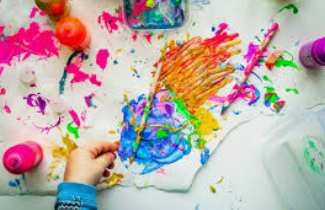
Have you ever felt instantly calmer stepping into a room painted soft sage green? Or noticed a surge of energy when you wore something bright red? Color is rarely neutral. It speaks to something primal in us — influencing mood, memory, and meaning long before we find the words to describe what we’re feeling.
Art therapy takes this intuition seriously. Rather than treating color as decoration, it treats color as communication — a language available to everyone, regardless of artistic skill.
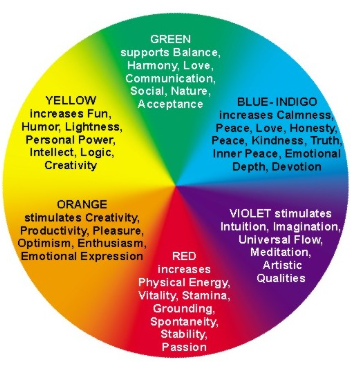
What is the color wheel of emotions?
The color wheel of emotions is a framework rooted in psychology that pairs colors with specific emotional states. Think of it as an emotional vocabulary for those moments when feelings are present but words aren’t. Red might surface as passion or frustration. A deep, quiet blue might represent the particular heaviness of grief — or the open spaciousness of peace. The same color can hold opposing truths, which is part of what makes working with it so revealing.
In art therapy settings, this framework helps people externalize what’s internal — giving visible form to experiences that might otherwise stay locked inside.
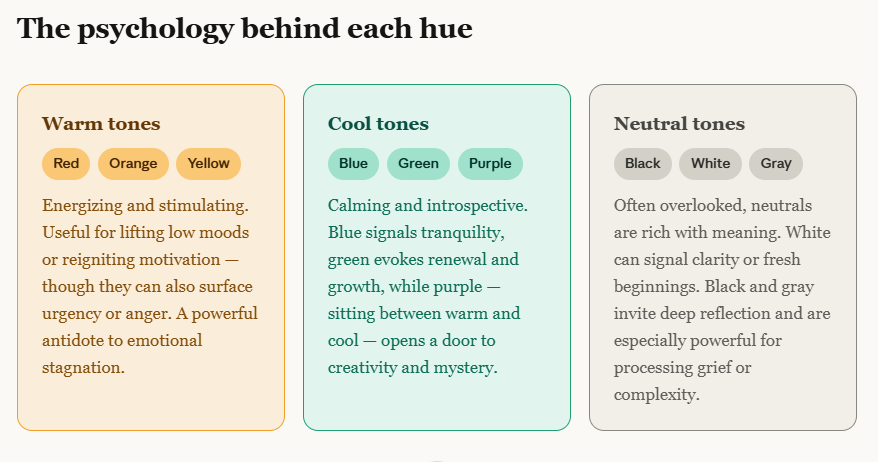
How art therapists work with color
In a session, a therapist might invite a client to choose colors that feel true to what they’re experiencing right now — not what looks good, but what feels honest. Someone moving through anxiety may find themselves drawn to blues and greens without quite knowing why. Someone who feels emotionally stuck might instinctively reach for vivid yellows and oranges.
The act of choosing is itself meaningful. And what emerges on the canvas — the weight of a brushstroke, the way colors bleed into each other, the parts left blank — often reveals more than verbal reflection alone could uncover.
A useful question to sit with during this process: Why does this color feel right today? Or: What does this shade remind me of? You might be surprised what comes up.
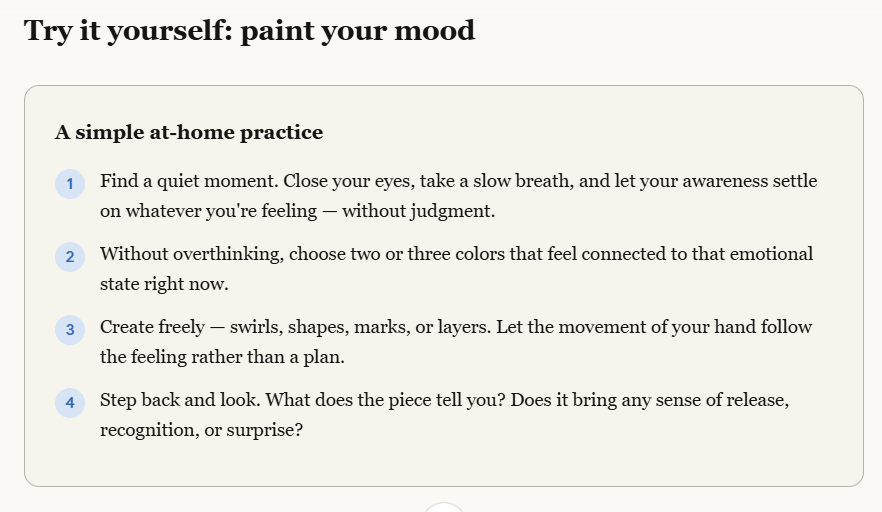
There’s no right outcome here. The goal isn’t a finished painting — it’s a moment of honest contact with yourself, expressed in color rather than words.
Color as a path to healing
What art therapy reminds us is that color is never just pigment. It carries memory, emotion, and meaning that words can miss entirely. Whether you’re processing something heavy or simply exploring how you feel on an ordinary Tuesday, picking up a brush and letting color speak can be quietly transformative.
You don’t need to be an artist. You just need to be willing to look at what you reach for — and ask yourself why.
Every shade has something to say. The question is whether we’re listening.

Leave a Reply